
China Best Radiance Spa Supplier for Global Buyers?
China Best Radiance Spa Supplier for Global Buyers? This question matters as wellness businesses expand across borders. The Global Wellness Institute reported that the global spa industry reached approximately US$137.8 billion in 2023. Its 2024 Global Wellness Economy Monitor also valued the wider wellness economy at US$6.3 trillion. These figures suggest strong demand, but market growth alone cannot prove supplier quality.
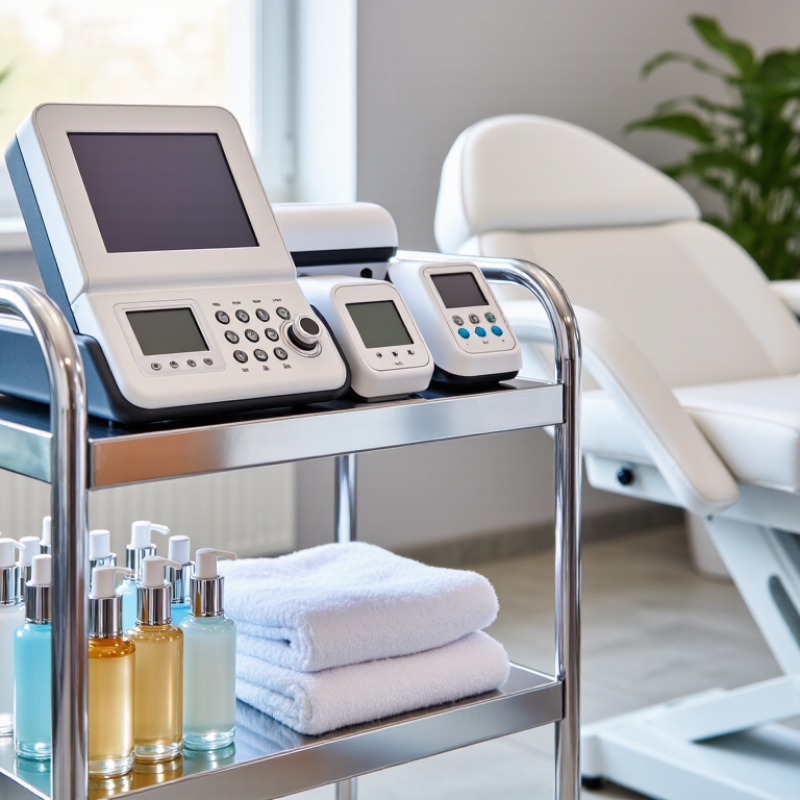
For global buyers, a reliable radiance spa supplier should combine manufacturing experience with documented product controls. Buyers may examine factory audits, material traceability, safety testing, packaging performance, and export records. Details matter. A stainless-steel treatment trolley should arrive without sharp edges. A facial device should include clear operating instructions and verified electrical specifications. These practical checks often reveal more than polished catalog photographs.
China offers broad OEM and private-label capabilities, but selection still requires disciplined review. The International SPA Association’s industry research highlights the importance of service quality, operational consistency, and customer trust. Those principles apply to equipment and spa furnishings as well. Certifications can help. They are not the whole answer. A supplier may hold relevant documentation yet provide weak after-sales support or inconsistent batches. That risk deserves honest attention.
The strongest candidates communicate clearly, sample products before bulk orders, and explain warranty limits in writing. They also understand destination-market requirements, including labeling, electrical compliance, and responsible product claims. However, no supplier fits every buyer. Budget, treatment type, shipping route, and local regulations change the decision. This guide examines whether Chinese manufacturers can meet those demands reliably, professionally, and transparently for international radiance spa businesses.
Define China’s Radiance Spa Supplier Market Within the $6.3T Wellness Economy
China’s radiance spa supplier market sits inside a rapidly expanding wellness economy. The Global Wellness Institute valued the global wellness economy at $6.3 trillion in 2023. It projects growth toward nearly $9 trillion by 2028. Beauty and personal care remain major spending categories, supported by demand for visible skin improvement, relaxation, and preventive self-care.
China offers dense manufacturing networks, skilled formulation teams, and flexible production capacity. These advantages help overseas buyers develop facial machines, treatment beds, LED systems, consumables, and spa furniture from one sourcing base.
The Global Wellness Institute’s 2024 Spa Industry Research reported a global spa economy of about $137.8 billion in 2023. That figure gives suppliers meaningful room to serve hotels, clinics, salons, and destination spas.
However, a large market does not automatically mean reliable supply. Buyers should inspect factory records, product testing, electrical certifications, ingredient documentation, and after-sales response times. Samples should be tested in real treatment rooms, not only photographed. Small details matter: cable length, cleaning access, noise levels, and replacement-part availability. My experience suggests that supplier comparisons often overvalue price and underestimate training support. That approach needs reconsideration. China’s strongest opportunity is not simply low-cost production; it is consistent, documented, and adaptable service for professional spa operators. The market still has uneven quality, and that weakness should remain visible during procurement.
Compare Supplier Quality Through ISO 9001, ISO 22716, and CE Certification
China Best Radiance Spa Supplier for Global Buyers?
Compare Supplier Quality Through ISO 9001, ISO 22716, and CE Certification
Choosing a spa supplier requires more than attractive product photos and fast replies. ISO 9001 shows that the factory follows a documented quality management system. Buyers should check the certificate’s scope, issuing body, validity, and production address. A certificate is useful evidence, not automatic proof of perfect products.
For skincare products, ISO 22716 matters because it covers cosmetic good manufacturing practices. It addresses hygiene, personnel training, raw materials, production records, storage, and traceability. During a supplier review, ask for batch records and packaging controls. Visit the facility if possible. Clean floors help, but consistent documentation matters more.
CE certification applies only to products covered by relevant European requirements. It is not a universal quality badge for every spa device or cosmetic item. Confirm the exact model, applicable directives, test reports, and declaration of conformity. Be careful here. Some documents look official but lack clear verification details. Online checks can reveal useful facts, yet they cannot replace technical assessment.
A strong supplier should explain corrective actions without avoiding difficult questions. Ask how the factory handles damaged packaging, failed inspections, and customer complaints. Reliable answers are specific. They include dates, responsible teams, and measurable improvements.
Certificates can expire. Processes can drift. One review may miss a weakness, especially when production changes quickly. Continued sampling, incoming inspections, and clear contracts create stronger protection for global buyers.
China Best Radiance Spa Supplier for Global Buyers? - Compare Supplier Quality Through ISO 9001, ISO 22716, and CE Certification
Use this evidence-based comparison to assess the quality system, cosmetic manufacturing controls, and product conformity of China-based radiance spa suppliers. Certification applicability depends on the product type, intended use, and destination market.
| Quality Dimension | ISO 9001 Quality Management | ISO 22716 Cosmetic GMP | CE Conformity | Documents and Evidence to Request | Global Buyer Evaluation | Applicability |
|---|---|---|---|---|---|---|
| Purpose of the Standard | Specifies requirements for a quality management system that helps an organization consistently provide products and services meeting customer and applicable statutory requirements. | Provides Good Manufacturing Practice guidelines for the production, control, storage, and shipment of cosmetic products. | Indicates that the manufacturer has completed the applicable European Union conformity assessment process for a product covered by relevant EU legislation. | Current certificate or Declaration of Conformity, certification scope, issuing or notified organization where applicable, and validity dates. | Confirm that the certificate holder, manufacturing site, and product scope match the supplier being evaluated. | System / Product Dependent |
| Typical Product Coverage | Suitable for organizations manufacturing spa equipment, beauty devices, accessories, packaging, or cosmetic products. | Relevant to cosmetic creams, serums, masks, lotions, cleansers, and other cosmetic preparations. | Relevant to products within applicable EU harmonized legislation, such as certain electrical or electronic equipment, machinery, and medical devices. | Product list, model numbers, manufacturing address, and scope wording on the certificate or technical file index. | Do not treat one certification as proof that every product in a supplier’s catalog is covered. | Conditional |
| Documented Processes | Usually includes documented procedures for order review, purchasing, production control, nonconforming outputs, corrective action, and continual improvement. | Includes documented procedures for personnel hygiene, premises, equipment, raw materials, production, packaging, quality control, complaints, and recalls. | Requires technical documentation and conformity assessment activities appropriate to the product and applicable EU requirements. | Quality manual or process map, controlled SOP index, batch records, inspection procedures, and change-control procedure. | Check whether procedures are implemented on the production floor rather than maintained only for audit purposes. | Expected |
| Incoming Material Control | Requires controls for externally provided processes, products, and services, including supplier evaluation and purchasing information. | Emphasizes approved suppliers, material specifications, receipt checks, identification, quarantine, sampling, and release of cosmetic raw materials and packaging. | Focuses on components and technical characteristics relevant to product safety and conformity; it does not replace incoming-material quality control. | Approved supplier list, raw-material specifications, certificates of analysis where applicable, incoming inspection records, and traceability samples. | Give higher confidence to suppliers that can link each batch to approved raw materials and packaging. | Expected |
| Production and Batch Traceability | Supports controlled production, identification, traceability where required, and preservation of product conformity. | Requires controlled manufacturing and packaging operations, batch documentation, in-process controls, and traceability of cosmetic batches. | Requires production and conformity records sufficient to demonstrate compliance for the relevant product category. | Batch numbering rules, production records, line-clearance records, inspection reports, and sample retention policy. | Request a redacted sample batch record and verify that raw materials, operators, equipment, inspections, and release decisions are traceable. | Expected |
| Testing and Product Safety | Requires monitoring and measurement processes suitable for verifying product conformity and management-system performance. | Requires quality-control activities appropriate to cosmetic materials and products, including defined specifications and release controls. | For applicable products, technical documentation may include risk assessment, test reports, electrical safety, electromagnetic compatibility, machinery safety, or other relevant evidence. | Test standards and methods, calibration records, laboratory qualifications, product test reports, risk assessment, and final inspection records. | Match test reports to the exact model, formulation, voltage, intended use, and destination-market requirements. | Product Dependent |
| Nonconformity and Corrective Action | Requires control of nonconforming outputs and corrective action to eliminate causes of problems and prevent recurrence. | Supports investigation and documented handling of deviations, rejected materials, rejected batches, complaints, and recalls. | Nonconformities identified during conformity assessment must be addressed before the product is placed on the EU market. | Corrective-action reports, deviation logs, complaint records, recall procedure, and examples of completed investigations. | Assess whether the supplier can provide root-cause analysis and preventive actions, not only replacement or refund commitments. | Expected |
| Audit and Certification Validity | Certification is normally maintained through surveillance and recertification audits by an independent certification body. | ISO 22716 certification claims should identify the certification body and the precise site or activity covered; GMP compliance may also be assessed through customer or regulatory audits. | CE marking is not a universal certificate issued by one central EU certification office. Depending on the legislation and risk class, the manufacturer may self-declare or require a notified body. | Certificate number, scope, site address, issue and expiry dates, accreditation information, Declaration of Conformity, and notified-body details when required. | Verify certificates directly with the issuing organization where possible and check that no scope, site, or expiry mismatch exists. | Verify |
| Best Use in Supplier Selection | Useful for evaluating general process discipline, customer order control, supplier management, and continual improvement. | Most useful when purchasing finished cosmetic products or cosmetic formulations requiring controlled hygiene, batch release, and traceability. | Essential only when the product falls under applicable EU product legislation; it is not a general indicator of factory quality or cosmetic GMP. | Supplier questionnaire, factory audit report, product specification, quality agreement, sample inspection plan, and regulatory compliance file. | Use all three as complementary evidence rather than ranking a supplier by certificate count alone. | Complementary |
Important: ISO 9001 and ISO 22716 are management and manufacturing-practice standards, while CE marking is a product conformity declaration for applicable European Union legislation. A certificate or CE mark does not by itself guarantee product performance, regulatory approval in every country, or suitability for a specific spa application.
Verify Spa Device Safety Against IEC 60601-1 and EU MDR Standards
China’s Radiance Spa Device Supplier for Global Buyers?
Safety verification should begin before price discussions. IEC 60601-1 evaluates basic safety and essential performance for applicable medical electrical equipment. It covers insulation, protective grounding, leakage current, temperature, and abnormal operation. A supplier should provide the complete test report, not only a certificate image.
The EU MDR changes the question. If a spa device makes medical or treatment claims, its intended purpose may place it within medical-device requirements. The European Commission reports more than 500,000 medical devices circulate in the European market. That scale makes traceability important. Check risk-management files, clinical evidence, technical documentation, post-market procedures, and the EU Declaration of Conformity. Also confirm whether the notified-body route applies.
MedTech Europe’s 2024 industry figures describe about 15,000 European medical-technology companies, with roughly 90% being small or medium-sized businesses. This shows why supplier capability can vary sharply. Ask for production-batch records, electrical safety retesting, software controls, and complaint-response timelines. Verify the laboratory’s accreditation and report scope. A polished certificate can still miss a changed power supply or loose connector. No audit is perfect. That weakness deserves attention. The strongest supplier welcomes destructive testing, sample checks, and documented corrective action instead of promising compliance by email.
Verify Spa Device Safety Against IEC 60601-1 and EU MDR Standards
This timeline highlights key publication and application milestones relevant to the safety and regulatory evaluation of electrically powered medical and aesthetic devices. Suppliers should confirm the applicable IEC 60601-1 edition, risk-management evidence, technical documentation, and EU MDR conformity requirements for each product.
Reference points: IEC 60601-1 first edition published in 1977; second edition in 1988; third edition in 2005; Amendment 1 in 2012; Amendment 2 in 2020. Regulation (EU) 2017/745 was adopted in 2017 and became applicable on 26 May 2021. Always verify the current harmonised standards and applicable regulatory guidance before market placement.
Assess Export Capability Using MOQ, Lead-Time, Incoterms, and Warranty Data
China Best Radiance Spa Supplier for Global Buyers?
Export capability is visible in the details, not polished product photos. Ask for the minimum order quantity by model, color, and packaging type. A flexible MOQ can support market testing, but it may increase unit cost. Request a written quotation for 50, 100, and 500 units. Compare the price changes carefully. Some suppliers quote low MOQs, then add setup or packing fees.
Lead-time evidence matters more than promises. Ask for production days, inspection time, and shipping preparation separately. A practical supplier should explain delays caused by peak seasons or material shortages. During my procurement reviews, unclear schedules often created larger problems than higher prices. I still find forecasts imperfect. Build a buffer of seven to fourteen days.
Incoterms also reveal export experience. Confirm whether the quotation uses EXW, FOB, CIF, or DDP terms. Check which party handles customs clearance, insurance, duties, and destination delivery. Never rely on an abbreviated message alone. Request commercial invoices, packing lists, and export documentation samples. Warranty terms should specify coverage, duration, response time, and evidence requirements. Ask how defects are reported through photos, videos, or inspection records. A reliable supplier should offer a clear replacement, repair, or credit process. Test this process with a small order before scaling.
Rank Suppliers by Total Cost and the GWI’s 2028 Wellness Growth Forecast
China Best Radiance Spa Supplier for Global Buyers?
Ranking suppliers by unit price alone can mislead spa buyers. A lower quotation may hide ocean freight, import duties, installation, training, and replacement parts. Total cost gives a clearer picture.
Build a scoring sheet for each supplier. Include equipment price, packaging, shipping to your port, customs handling, energy use, and expected maintenance. Add warranty response time. A supplier offering remote support within 24 hours may reduce costly downtime. Request factory videos, production records, test reports, and references from comparable overseas projects. Ask for a sample unit when practical. Small details matter, such as connector quality and cleaning instructions.
The Global Wellness Institute’s 2028 wellness growth forecast suggests continued demand for preventive care, beauty services, and restorative experiences. That outlook supports careful capacity planning, not blind purchasing. Choose equipment that matches local client habits and therapist skills. A compact facial system may outperform a larger machine if the treatment room is small. Energy efficiency also affects total cost over several years.
Our first ranking was too simple. We focused heavily on purchase price and underestimated training expenses. That was a mistake. Exchange-rate changes, port delays, and seasonal demand can alter the final result. Recheck quotations quarterly, compare delivered cost, and negotiate spare parts before signing. Forecasts are useful, but cash flow remains real.
Related Posts
-
2026 Top Skin Spa Trends You Need to Know about
-
How to Choose the Best Esthetician Facial Machine for Your Spa?
-

Best Botox Spa Treatments for Youthful Skin Results?
-

China Top Radiance Spa Guide for Ultimate Relaxation and Wellness?
-
2026 Best Aesthetic Spa Trends for Global Buyers Guide?
-

How to Choose the Best Skin Spa for Your Skincare Needs