China Top 10 Purity Peptide Manufacturers for Global Buyers
Purity Peptides are judged by more than a headline percentage. Buyers need evidence: a defined sequence, batch-specific analytical results, and clear methods for measuring purity. A certificate of analysis is useful, but it should be read alongside chromatograms and, where appropriate, mass-spectrometry data. Small details matter.
The commercial context is expanding. Grand View Research estimated the global peptide therapeutics market at USD 46.5 billion in 2023. That figure describes therapeutics, not the market for research-grade peptide suppliers, so it should not be treated as a direct measure of manufacturer quality. Still, it signals why international buyers increasingly scrutinize supplier documentation, consistency, and communication.
Peptide researcher Richard DiMarchi’s published work highlights the distinctive position of peptides between small-molecule drugs and larger biologics. The following is a paraphrase, not a verbatim quotation: peptide design must account for both molecular properties and practical delivery. That distinction matters when assessing manufacturers. A supplier’s catalog can look polished; a repeatable batch record is more revealing. No ranking can replace independent qualification, and “high purity” alone is not a complete specification. The guide to China’s top 10 Purity Peptides manufacturers therefore focuses on verifiable quality practices, technical transparency, and export-ready service—not claims that cannot be checked.
Understanding High-Purity Peptides and Their Applications
High-purity peptides are short chains of amino acids made to meet defined quality specifications. Buyers often compare a stated purity percentage, but that number alone does not show the full quality picture. It may describe the proportion of the main peptide detected by a particular method. That distinction matters.
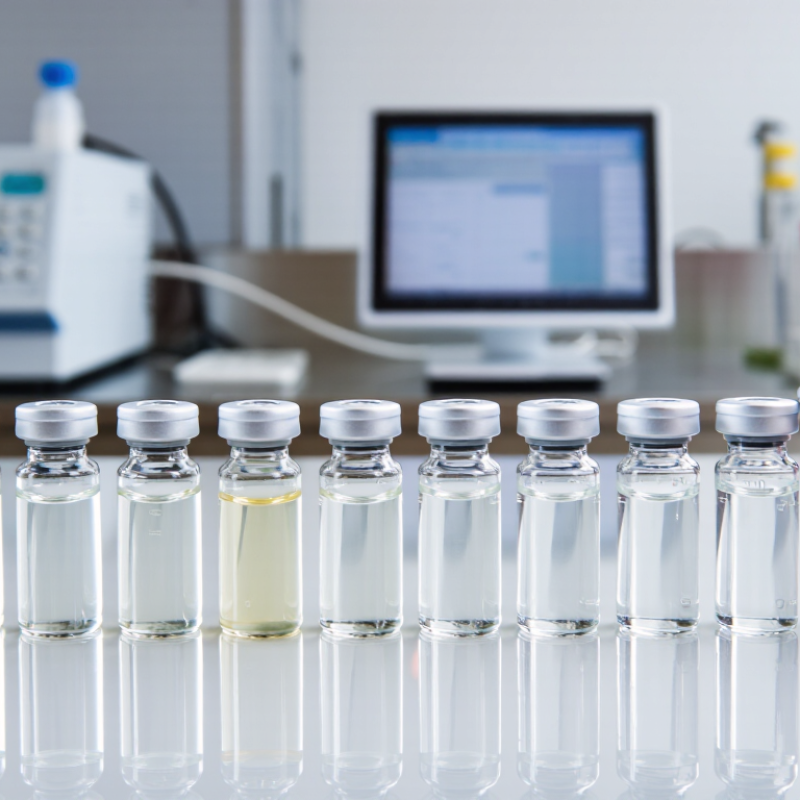
A useful review starts with lot-specific records. High-performance liquid chromatography can estimate purity, while mass spectrometry helps confirm molecular identity. Buyers should also check how water content, counterions, storage conditions, and residual solvents are reported. Even careful testing has limits: one chromatogram cannot reveal every impurity or handling risk. Clear methods and traceable batch documentation make results easier to assess.
These peptides support laboratory research, including assay development, reference standards, and studies of molecular interactions. In formulation research, small differences in sequence or handling may affect solubility and stability. A vial should arrive with clear storage guidance; moisture or repeated temperature changes can complicate later measurements. Research-grade material is not automatically suitable for clinical use. The intended application, validation needs, and quality controls must all be considered. Purity is important, but it is not the whole story.
China Top 10 Purity Peptide Manufacturers for Global Buyers - Understanding High-Purity Peptides and Their Applications
Buyer guide: The ten rows below describe common peptide manufacturing capability areas, not ranked or named companies. Specifications vary by sequence, intended use, and supplier. Purity targets are agreed project by project; research peptides are often specified at ≥95% or ≥98% by analytical HPLC, but these are not universal grades or guarantees.
| Capability Area | Typical Product or Project | Common Application | Purity and Identity Considerations | Useful Quality Checks |
|---|---|---|---|---|
| Research-grade linear peptides | Custom sequences for laboratory research | Biochemical assays, antibody research, and target validation | Purity is set by the buyer; ≥95% or ≥98% by analytical HPLC are common research specifications. The sequence should be confirmed by mass spectrometry. | Analytical HPLC or UPLC; LC-MS or MALDI-TOF MS; batch-specific certificate of analysis |
| Peptide reference materials | Sequence-defined material used as an analytical reference | Assay development, chromatographic system suitability, and analytical method checks | Besides chromatographic purity, buyers may require an assigned content value. Water, residual solvent, and counterion content can affect the amount of peptide in a weighed sample. | Identity testing; purity method; water determination; content or assay assignment; traceable documentation where required |
| Diagnostic peptides | Peptide antigens or capture and detection reagents | Immunoassay and in-vitro diagnostic research or development | Sequence identity and consistent lot performance matter. Functional performance should be assessed in the intended assay; chemical purity alone does not establish diagnostic performance. | LC-MS; HPLC; assay-specific binding or functional testing; lot-to-lot comparison |
| Vaccine research peptides | Peptide epitopes, sometimes conjugated to a carrier protein | Preclinical immunology and vaccine research | Requirements depend on whether the material is an unconjugated peptide or a conjugate. Conjugation ratio and unreacted components may need separate assessment. | Peptide identity and purity; conjugation assessment; residual free peptide or carrier evaluation, as applicable |
| Therapeutic peptide APIs | Peptide active pharmaceutical ingredient for drug development or manufacture | Pharmaceutical development and regulated medicinal products | Specifications are product- and market-specific. GMP controls, impurity limits, validated analytical methods, and stability requirements are established for the intended regulatory pathway. | Validated identity, assay, purity, and impurity methods; stability studies; batch records and GMP documentation as applicable |
| Cyclic and disulfide-containing peptides | Peptides with a ring closure or one or more disulfide bonds | Research and development of structurally constrained peptide molecules | Correct cyclization or disulfide connectivity is important and may not be demonstrated by mass alone. Folding and oxidation conditions can affect product composition. | LC-MS; chromatographic purity; disulfide mapping or other structure-sensitive analysis when required |
| Post-translationally modified peptides | Phosphorylated, acetylated, methylated, or otherwise modified sequences | Cell-signaling, protein-interaction, and modification-specific assay research | The modification type and position should be specified. Positional isomers or incomplete modification can require methods beyond a simple mass check. | LC-MS; HPLC; modification-site confirmation where needed; assessment of unmodified or partially modified species |
| Labelled peptides | Peptides bearing fluorescent, biotin, isotope, or other analytical labels | Imaging, binding assays, enrichment, and quantitative analysis | Specifications should define the label and attachment site. Free label and incomplete labelling may affect the intended assay. | LC-MS; HPLC; label incorporation or conjugation assessment; functional testing where relevant |
| Long or complex peptides | Sequences with increased length, hydrophobicity, or difficult residues | Protein-domain studies, epitope research, and specialized assay development | Longer or difficult sequences can produce more deletion or truncated impurities and may be harder to purify. Feasibility and achievable specification should be confirmed sequence by sequence. | LC-MS; analytical HPLC; impurity profile review; solubility and handling assessment |
| Peptide pools and mixtures | Defined collections of multiple peptide sequences | Epitope screening, immune-response research, and multiplex assay development | Buyers should define pool composition and whether individual component amounts need to be controlled. A single overall purity value may not describe each component. | Component identity checks; composition records; quantitative or representative component analysis as specified |