

Top 10 Cohesive Bandage Manufacturers Worldwide?
Choosing a reliable Cohesive Bandage Manufacturer requires more than comparing product photos or wholesale prices. This global overview examines ten established manufacturers through practical criteria. These include material quality, stretch consistency, skin comfort, packaging control, production capacity, and documented quality systems. It also considers how each company serves hospitals, sports clinics, veterinary practices, and everyday first-aid users.
Professor Peter Vowden, a respected wound-care specialist, has stated, “Compression is the mainstay of treatment for venous leg ulcers.” His observation highlights an important point. A cohesive bandage is not merely a colorful self-adhering wrap. Its tension, breathability, edge stability, and removal behavior can affect real clinical use. A roll that grips evenly feels different on a swollen ankle. Small differences matter.
This article does not treat global sales claims as automatic proof of superiority. Public information can be incomplete. Some manufacturers disclose testing details, while others provide limited technical evidence. That gap deserves attention. The ranking therefore balances visible market reputation with product specifications, manufacturing experience, certifications, customer access, and application suitability. Readers should still verify current certificates, sample performance, and regional compliance before purchasing.
The selected companies represent different strengths. Some focus on medical-grade consistency. Others compete through customization, private labeling, or large-scale distribution. A few may appear less impressive until their supply-chain reliability is examined. That is where the comparison becomes useful. Quality is not always obvious from the package. It is often revealed during repeated wrapping, storage, handling, and removal.
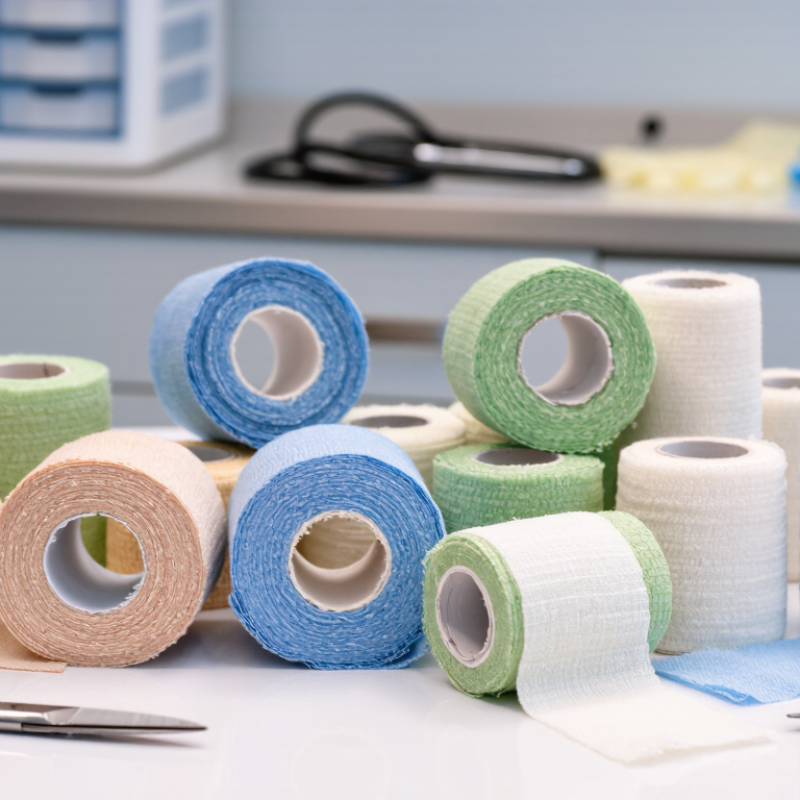
Cohesive Bandages: Definition, Uses, and Key Product Features
Cohesive bandages are elastic wraps that grip themselves, not skin or hair. They usually combine stretch fabric with a cohesive coating. This makes them useful for securing dressings, supporting sprains, and protecting veterinary or sports injuries. They can also provide light compression when applied correctly. A 2024 Grand View Research assessment valued the wider global wound care market at about US$21.8 billion in 2023, reflecting continued demand for practical dressing and fixation products. Cohesive wraps represent only one part of that market, so the figure should not be treated as their standalone sales value.
Good products should unwind smoothly, tear by hand, and maintain reliable cohesion after movement. Breathable construction helps reduce trapped moisture around covered skin. Latex-free materials can lower allergy concerns for sensitive users. Width, stretch percentage, edge stability, and roll length affect real-world handling. It stretches. That matters during ankle or wrist application. However, stronger tension is not automatically better. Excessive compression may restrict circulation, especially when users lack training. Manufacturers should provide clear application guidance, material disclosures, and batch-level quality testing. ASTM or ISO-based testing can support claims about tensile strength, elongation, and packaging integrity. A practical weakness remains: “breathable” is often used broadly, without consistent consumer-friendly measurement. Buyers should therefore examine technical sheets, not rely on front-label language alone. Product selection should match the injury, body area, duration of use, and professional advice when circulation or swelling is involved.
How to Evaluate Global Cohesive Bandage Manufacturers
Evaluating global cohesive bandage manufacturers requires more than comparing catalog photos and quoted prices. A reliable supplier should explain its materials, production controls, and testing methods clearly. Ask whether the bandage maintains consistent elasticity after repeated stretching. Check if the adhesive grips securely without leaving excessive residue. Small details matter.
Request samples from several production batches, not just one attractive prototype. Examine the fabric under bright light for loose threads, uneven coating, or weak edges. Review certificates, quality-management records, sterilization details, and batch traceability documents. A professional manufacturer should provide test results for tensile strength, skin contact safety, packaging integrity, and shelf life. A polished website is not evidence.
Factory experience also deserves practical verification. Ask about monthly capacity, backup equipment, inspection points, and response times for complaints. Confirm whether packaging can protect rolls during humid sea transport. Speak with technical staff, not only sales representatives. Their answers often reveal how seriously they understand clinical handling and user comfort. Price comparisons can mislead when one quotation excludes testing or custom packaging. I would also inspect production samples personally, because photographs hide flaws. Even experienced buyers can overvalue a low unit cost. That mistake may become expensive when inconsistent batches interrupt hospital or distributor supply.
Top 10 Cohesive Bandage Manufacturers Worldwide
Top 10 Cohesive Bandage Manufacturers Worldwide are commonly evaluated through product consistency, clinical suitability, and production transparency. A reliable manufacturer should control fabric tension, adhesive cohesion, edge softness, and roll compression. These details affect whether a bandage stays secure during movement. Fit matters. Strong suppliers usually offer latex-free options, breathable materials, and clearly documented sizes. Their products should support controlled use in clinics, sports care, veterinary settings, and first-aid environments.
A professional review should compare ten leading manufacturers by testing evidence, factory quality systems, and supply reliability. Useful checks include peel performance, stretch recovery, moisture resistance, and shelf-life data. Packaging should protect each roll from dust and humidity. Production audits also matter, especially when factories serve different regions. Experienced buyers often request samples before placing large orders. A sample may feel soft but still lose tension too quickly.
The ranking should also consider regulatory documentation, batch traceability, complaint handling, and delivery capacity. Public information is sometimes incomplete. Data can be uneven. Therefore, any worldwide top-ten list needs cautious interpretation rather than simple popularity scores. A manufacturer with excellent production equipment may provide limited clinical evidence. Another may offer strong documentation but weaker customization. This tension deserves attention when comparing private-label supply, hospital procurement, and high-volume distribution. Consistent inspection records remain more persuasive than polished marketing language.
Comparing Materials, Certifications, Production, and Market Reach
Top 10 Cohesive Bandage Manufacturers Worldwide?
Comparing Materials, Certifications, Production, and Market Reach
Material choice matters. Leading cohesive bandage manufacturers typically offer cotton, rayon, polyester, or blended substrates. Elastic fibers improve stretch and comfort, while cohesive coatings help the bandage adhere to itself without sticking to skin or hair. Latex-free options are increasingly important for clinics and sensitive users. Buyers should examine tear strength, breathability, residue, and performance after storage. A soft roll is useful, but it must also unwind evenly.
Certifications reveal how seriously a manufacturer controls risk. ISO 13485 supports medical-device quality management, while market-specific approvals may include CE marking under applicable European rules or registration requirements in the United States. Documentation should cover biocompatibility, sterilization status, shelf life, and batch traceability. Certificates alone are not enough. Audit the scope and expiration dates. That gap matters.
Production capability separates a dependable supplier from a trading intermediary. Automated coating lines, controlled curing, clean packaging areas, and in-process tensile testing can improve consistency. Ask for sample batches, not only brochures. Market reach also depends on regulatory support, multilingual packaging, distributor networks, and reliable export logistics. A manufacturer serving hospitals across several regions should explain how it handles complaints and recalls. No scorecard is perfect. A supplier may look strong on paper yet struggle with seasonal capacity, uneven coating, or delayed documentation. Careful comparison should include these less visible weaknesses.
Top 10 Cohesive Bandage Manufacturers Worldwide? - Comparing Materials, Certifications, Production, and Market Reach
| Rank | Anonymized Manufacturer Profile | Primary Cohesive Bandage Materials | Latex-Free Options | Typical Product Widths | Key Certifications and Compliance | Estimated Annual Capacity | Private-Label Capability | Primary Production Region | Market Reach | Typical Lead Time |
|---|---|---|---|---|---|---|---|---|---|---|
| 1 | Anonymized Manufacturer Profile 01 | Polyester or non-woven fabric with synthetic elastic yarn and cohesive adhesive coating | Yes; standard product line | 2.5, 5, 7.5, 10, and 15 cm | ISO 13485; CE-marking support under applicable EU medical-device requirements; ISO 10993 testing available for selected products | Approximately 35–50 million rolls per year | Extensive; custom colors, packaging, dimensions, and printed cartons | East Asia | North America, Europe, Asia-Pacific, Middle East, and Africa | 30–60 days for repeat orders |
| 2 | Anonymized Manufacturer Profile 02 | Elastic non-woven fabric, rayon, polyester, and cohesive synthetic adhesive | Yes; latex-free and skin-sensitive variants | 5, 7.5, 10, and 15 cm | ISO 13485; CE technical documentation; FDA establishment registration where applicable; biocompatibility documentation | Approximately 25–40 million rolls per year | High; hospital, sports, veterinary, and retail packaging | Western Europe | Europe, North America, Australia, and selected Asian markets | 45–75 days |
| 3 | Anonymized Manufacturer Profile 03 | Cotton-blend or non-woven elastic substrate with cohesive polymer coating | Available on selected lines | 2.5, 5, 7.5, and 10 cm | ISO 13485; ISO 9001; CE compliance support; product safety and skin-contact testing | Approximately 20–35 million rolls per year | High; flexible minimum order quantities for distributors | East Asia | Asia-Pacific, Europe, Latin America, and the Middle East | 25–50 days |
| 4 | Anonymized Manufacturer Profile 04 | Polyester, viscose, and elastane with synthetic cohesive coating | Yes; standard and high-porosity versions | 5, 7.5, 10, and 20 cm | ISO 13485; CE-marking support; REACH and restricted-substance controls; ISO 10993 testing by product | Approximately 18–30 million rolls per year | Moderate to high; custom labels and retail-ready packs | Central Europe | European Union, United Kingdom, North America, and Central Asia | 40–80 days |
| 5 | Anonymized Manufacturer Profile 05 | Non-woven polypropylene or polyester with latex-free cohesive adhesive | Yes; core product focus | 2.5, 5, 7.5, 10, and 15 cm | ISO 13485; FDA registration support where applicable; CE documentation; quality-control testing for adhesion and tensile strength | Approximately 15–28 million rolls per year | Extensive; customized medical and athletic formats | Southeast Asia | North America, Europe, Australia, and Southeast Asia | 35–65 days |
| 6 | Anonymized Manufacturer Profile 06 | Cotton, rayon, polyester, and elastomeric yarn with cohesive latex or synthetic adhesive | Available; synthetic adhesive requires specification | 5, 7.5, 10, and 15 cm | ISO 13485; CE compliance support; ISO 9001; documented sterilization compatibility for selected products | Approximately 12–25 million rolls per year | High; distributor and institutional procurement programs | North America | United States, Canada, Latin America, and selected European markets | 45–90 days |
| 7 | Anonymized Manufacturer Profile 07 | Elastic polyester or polyamide fabric with cohesive polymer adhesive | Yes; latex-free production available | 2.5, 5, 7.5, and 10 cm | ISO 13485; CE technical file support; REACH compliance; quality testing for conformability and unwind force | Approximately 10–22 million rolls per year | Moderate; color, size, and packaging customization | South Asia | South Asia, Africa, the Middle East, and selected European markets | 45–90 days |
| 8 | Anonymized Manufacturer Profile 08 | Breathable non-woven polypropylene with synthetic cohesive adhesive | Yes; latex-free range | 5, 7.5, 10, and 15 cm | ISO 13485; ISO 9001; CE documentation; biocompatibility and packaging-validation records available by product | Approximately 8–18 million rolls per year | High; sports, first-aid, and veterinary applications | East Asia | Asia-Pacific, Europe, North America, and Latin America | 30–70 days |
| 9 | Anonymized Manufacturer Profile 09 | Viscose, polyester, cotton-blend, and elastic yarn with cohesive adhesive coating | Available on request | 5, 7.5, 10, and 15 cm | ISO 13485; CE compliance support; ISO 9001; product-specific skin-contact assessment | Approximately 7–16 million rolls per year | Moderate; standard private-label formats | Eastern Europe | Europe, Central Asia, and selected Middle Eastern markets | 50–100 days |
| 10 | Anonymized Manufacturer Profile 10 | Polyester or polypropylene non-woven fabric with latex-free cohesive polymer coating | Yes; made-to-order options | 2.5, 5, 7.5, 10, and 15 cm | ISO 13485; CE documentation support; ISO 9001; routine testing for tensile strength, adhesion, and package integrity | Approximately 5–14 million rolls per year | Moderate; suitable for regional distributors and specialty retailers | Latin America | Latin America, North America, and selected export markets | 45–90 days |
Note: Manufacturer identities are intentionally anonymized. Capacity, lead-time, and market-reach figures are indicative industry ranges; certification status should be verified against current manufacturer certificates, technical files, and destination-market requirements before procurement.
Industry Trends Shaping the Future of Cohesive Bandages
Top 10 Cohesive Bandage Manufacturers Worldwide?
Industry Trends Shaping the Future of Cohesive Bandages
Cohesive bandages are moving beyond basic wrapping. Buyers now expect secure compression, clean removal, and comfortable wear. Grand View Research valued the global wound care market at about USD 20.4 billion in 2023. It also projects roughly 4% annual growth through 2030. This wider market supports steady demand for self-adherent products.
Sustainability is becoming practical, not decorative. Manufacturers are reducing packaging, testing recyclable materials, and lowering production waste. MarketsandMarkets reported that the global wound care market could reach nearly USD 25.8 billion by 2028. Growth is linked to aging populations, chronic wounds, sports injuries, and home treatment. Digital procurement is changing supplier comparisons, too. Buyers increasingly check test results, material disclosures, and batch consistency. Still, market estimates differ. The data is useful, but not perfect.
Tips: Compare tear strength, adhesion, breathability, and residue performance. Test the bandage on moving joints, not only flat skin. Ask for independent quality records. A low price can hide uneven tension or poor storage stability. Small clinics may also need easier color coding and compact packaging. This detail is often overlooked. Future leaders will combine reliable manufacturing with safer materials, faster customization, and evidence-based design.
