What Are the Top 10 Powder Apple Cider Vinegar Suppliers?
Choosing the right Powder Apple Cider Vinegar supplier requires more than comparing prices or reading polished product pages. This introduction examines ten leading suppliers through practical criteria, including ingredient sourcing, acetic acid consistency, powder solubility, testing procedures, certifications, packaging, and customer support. Small details matter, such as whether the powder dissolves smoothly in a shaker or leaves sediment at the bottom.
Carol Johnston, PhD, a respected vinegar researcher, has emphasized, “More research is needed before firm conclusions can be drawn.” That caution belongs at the center of this topic. Powder Apple Cider Vinegar is convenient, but convenience does not automatically prove quality, effectiveness, or safety. Supplier claims should be checked against certificates of analysis, independent laboratory testing, and transparent manufacturing information.
This guide does not treat every supplier as equal. Some companies may provide strong documentation but limited customization. Others may offer attractive bulk pricing while revealing little about testing methods. That gap deserves attention. The ranking considers both established manufacturers and specialized ingredient providers, including their experience serving supplement, food, and beverage brands.
Readers will see where each supplier performs well, where evidence remains incomplete, and which questions should be asked before purchasing. Flavor, moisture control, microbial testing, and batch traceability can affect the final product. The “top ten” label is useful, but it is not absolute. A supplier suitable for capsules may not suit drink mixes. Careful comparison remains essential.
What Is Powdered Apple Cider Vinegar and How Is It Made?
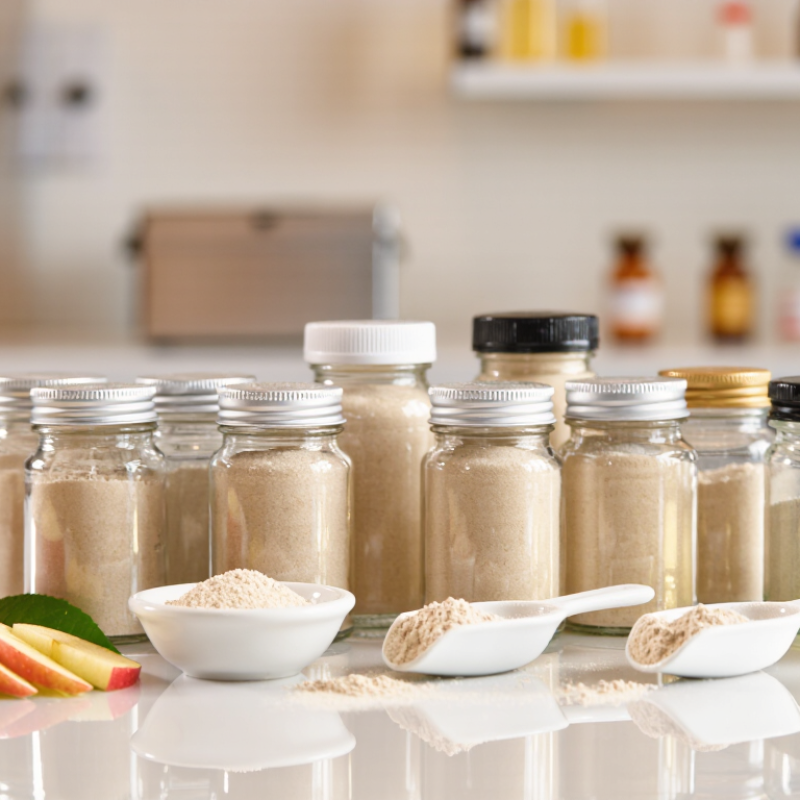
Powdered apple cider vinegar is concentrated liquid vinegar transformed into a dry, free-flowing ingredient. Manufacturers usually spray-dry fermented apple juice vinegar with a food-grade carrier, such as maltodextrin or fiber. The carrier reduces stickiness and protects the powder from moisture. Freeze-drying is another option, but it generally costs more and requires longer processing.
The process starts with apple juice fermentation. Yeast converts sugars into alcohol, while acetic-acid bacteria convert alcohol into vinegar. The liquid is filtered, standardized, and dried under controlled heat. A finished powder should be tested for moisture, acidity, residual solvents, microbial safety, and heavy metals. It should also show a clear conversion ratio, because one gram of powder does not equal one gram of liquid vinegar.
Industry data provides useful market context. Grand View Research estimated the global apple cider vinegar market at about USD 1.1 billion in 2022, with projected growth of roughly 7.2% annually through 2030. However, published data for powdered vinegar remains limited. That gap matters. Suppliers may describe “high potency” without explaining acetic-acid content or carrier levels. Buyers should request certificates of analysis, validated AOAC testing, allergen statements, and stability data. Powder can absorb moisture quickly. Clumping is common when packaging or storage is poor. A clean specification is helpful, but it is not proof of superior performance.
What Criteria Define the Top Powdered Apple Cider Vinegar Suppliers?
Choosing the top 10 powder apple cider vinegar suppliers requires more than comparing price lists. A reliable supplier should explain the vinegar’s source, fermentation process, drying method, and carrier ingredients. Clear specifications matter. Check acidity, acetic acid content, moisture, solubility, and serving consistency. These details reveal whether the powder suits capsules, drink mixes, or food applications.
Independent testing strengthens trust. Ask for recent certificates of analysis covering microbial safety, heavy metals, pesticides, and identity testing. Batch numbers should connect finished powder to its original materials. Strong suppliers also maintain traceable records, stable packaging, and documented quality procedures. Relevant manufacturing experience matters, but polished claims are not proof. I would still question vague “natural” language and unusually low prices.
Tips: Request a small sample before a large purchase. Mix it in room-temperature water and observe clumping, sediment, color, and flavor. Compare the sample with its specification sheet. Ask how moisture is controlled during storage and shipping. Confirm minimum order quantities, lead times, and technical support in writing. No supplier looks perfect. A minor inconsistency may expose a larger documentation weakness, so record every question and response before choosing.
Who Are the Top 10 Powdered Apple Cider Vinegar Suppliers?
The top ten powdered apple cider vinegar suppliers should be judged by evidence, not search ranking. Strong candidates usually include certified ingredient manufacturers, specialized spray-drying processors, organic-focused producers, and established nutrition ingredient distributors. Some also provide private-label services for capsules, drink mixes, and functional food formulas.
A reliable supplier should disclose the apple source, drying carrier, acidity profile, moisture level, and recommended storage conditions. Ask for recent certificates of analysis, microbiological results, heavy-metal screening, and allergen statements. Factory audits can reveal details that brochures often miss, such as dusty packing areas or poorly sealed cartons.
Batch consistency matters. A powder that clumps after opening may perform badly in production, even when its laboratory report looks acceptable. I have found that clear documentation is useful, but it never replaces a sample test.
Tips: Compare at least three samples under identical conditions. Check color, aroma, flowability, solubility, and taste. Confirm whether the quoted price includes testing and freight. Ask how quickly the supplier reports deviations. Organic certification may be important, but it does not automatically prove better flavor or stronger performance. Suppliers with responsive technical teams often deserve more attention than those offering the lowest first quotation. Availability can change, and one overlooked detail may affect the entire formula.
How Do the Top Suppliers Compare in Quality, Price, and Customization?
Comparing the top powder apple cider vinegar suppliers requires more than checking the lowest quote. Grand View Research valued the global vinegar market at about USD 7.7 billion in 2023 and expects steady growth through 2030. That growth increases supplier choice, but not necessarily product consistency. Experienced buyers should request recent certificates of analysis, acetic acid assay, moisture, bulk density, carrier percentage, and microbiological results. A clean specification sheet matters.
Price often changes with concentration, order volume, packaging, and testing requirements. A low per-kilogram quote may include a higher carrier ratio or exclude freight and laboratory fees. Compare the delivered cost per active-equivalent kilogram. Request three production lots, not one sample. Batch variation is easy to miss. Suppliers with stronger quality systems usually provide traceability records, allergen statements, contaminant screening, and documented storage conditions. These details support reliability, although paperwork alone cannot prove performance.
Customization separates basic traders from capable manufacturers. Ask whether they can adjust mesh size, acidity strength, carrier type, flavor profile, and sachet or drum packaging. Mordor Intelligence’s 2024 dietary supplements analysis highlights demand for convenient, format-specific products, which supports flexible powder development. However, customization can extend lead times and raise minimum order quantities. Some suppliers promise everything; few explain the compromises clearly. Independent verification remains essential before commercial approval.
Top 10 Powder Apple Cider Vinegar Supplier Benchmark
This anonymized benchmark compares ten supplier profiles using normalized scores from 0 to 100. Quality considers testing, consistency, and certification coverage; price competitiveness reflects relative bulk-cost efficiency; customization measures private-label, formulation, packaging, and order-flexibility capabilities. Higher scores indicate stronger performance.
How Can Buyers Select the Right Powdered Apple Cider Vinegar Supplier?
Selecting among the top 10 powdered apple cider vinegar suppliers requires more than comparing prices. Buyers should examine the supplier’s experience with vinegar powder, dietary ingredients, and moisture-sensitive products. A reliable supplier can explain its production process in clear, practical language.
Request a recent certificate of analysis for every proposed batch. Check acidity, carrier ingredients, moisture, microbial limits, heavy metals, and pesticide controls. Independent laboratory testing adds confidence. Ask whether the powder uses spray drying or another method, because processing can affect flavor and nutrient stability. Review the ingredient statement carefully. Some powders contain sweeteners, fillers, or concentrated flavoring.
Samples should be tested in the intended product, not only in a small glass of water. Observe its color, smell, flowability, sediment, and taste after several days. Packaging also matters. Moisture-barrier bags and sealed inner liners can prevent clumping during storage. Request stability data under realistic heat and humidity conditions. It may be incomplete, and that deserves an honest discussion. No checklist is perfect.
Supplier evaluation should also cover minimum order quantities, lead times, documentation, and batch traceability. A factory audit, virtual or on-site, can reveal sanitation practices and storage conditions. Confirm compliance with the destination market’s food regulations before signing any agreement. Communication is another practical test. Slow answers today may become serious delays during production. Still, even careful buyers can overlook a detail, so written specifications and retained samples remain essential.
