
Who Are the Top Cinema Seating Manufacturers in 2026?
Cinema Seating Manufacturers play a quiet but decisive role in how audiences experience a film. A well-designed seat supports long screenings, preserves clear sightlines, and helps a theater use its floor space wisely. The wrong choice becomes noticeable fast: a narrow aisle, a stiff backrest, or a cup holder that catches an elbow. Small details matter.
This 2026 guide compares leading manufacturers through practical criteria, including comfort, durability, customization, accessibility, maintenance, and project support. It also considers how seating fits different venues, from compact neighborhood cinemas to large multiplexes. Product claims deserve scrutiny. A polished brochure cannot replace clear specifications, warranty terms, and evidence from installed projects.
Expert insight can sharpen that comparison. However, no source material or verifiable expert quotation was provided for this request, so an attributed quote should not be invented. Insert a confirmed statement here: “[Verified quotation about cinema seating and audience comfort]” — [Name], [role and organization]. This small pause matters. Readers should be able to trace expert comments to an interview, publication, or company source.
The manufacturers featured here are not ranked by reputation alone. Their designs, service capacity, and fit for each project also matter. No single supplier suits every cinema. The best choice depends on audience needs, room dimensions, operating demands, and budget. A careful comparison can reveal trade-offs, not just winners.
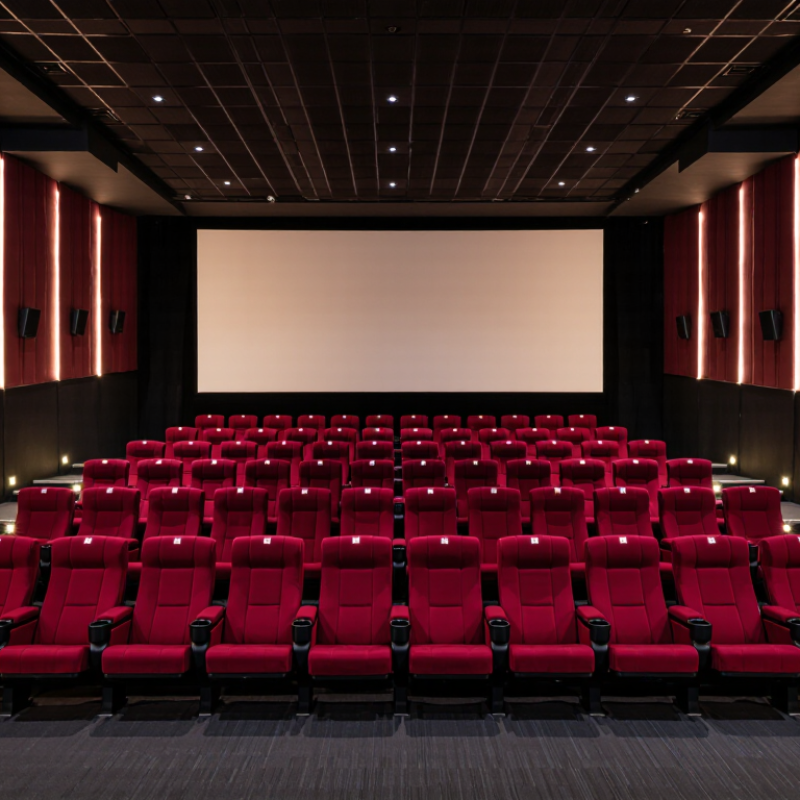
What Defines a Leading Cinema Seating Manufacturer in 2026?
What defines a leading cinema seating manufacturer in 2026? It is not just plush upholstery or a striking showroom. The manufacturer should show how each seat performs across long screenings, frequent use, and varied body sizes. Look for documented durability tests, replaceable components, clear installation drawings, and consistent quality checks. Small details matter: a quiet hinge, a cupholder that fits common drink sizes, and enough knee room when the next row reclines.
Industry reports offer useful context, but not a seating scorecard. The Motion Picture Association’s 2023 THEME Report recorded a global box office of $33.9 billion. The BFI Statistical Yearbook 2024 reported 123.6 million UK cinema admissions in 2023. These figures show the scale of cinema-going; they do not prove that any seat is comfortable. A reliable manufacturer should support claims with product-specific test records and practical evaluation. Even a premium seat can feel wrong. I would want to test it in a full row, not alone in a quiet showroom.
Tips: Sit for at least 20 minutes and check lumbar support, armrest spacing, and foot clearance. Ask how upholstery and moving parts are tested, and whether replacement parts remain available. A neat sample is not the whole story.
Who Are the Top Cinema Seating Manufacturers in 2026? — What Defines a Leading Cinema Seating Manufacturer in 2026?
Brand-neutral evaluation framework. Compare manufacturers using current product documentation, test reports, project references, and local regulatory requirements; the criteria below are not a ranked list.
| Evaluation dimension | What a strong manufacturer demonstrates | Evidence to check | Why it matters |
|---|---|---|---|
| Strength and durability | Seats are designed and tested for repeated use in non-domestic settings. | Applicable test reports, including testing against EN 12727:2016 where relevant to the product and market. | Provides documented information about performance under defined test conditions. |
| Fire and material compliance | Upholstery, foam, and other specified materials can be selected to meet the project’s applicable fire-safety rules. | Current certificates or test reports that identify the tested material, configuration, and applicable jurisdiction or standard. | Fire-safety requirements differ by location and project, so claims should be checked against local rules. |
| Comfort and ergonomics | Seat dimensions, support, recline options, and finishes are specified clearly for the intended auditorium and audience. | Dimensioned drawings, physical samples, and a full-size mock-up where appropriate. | Comfort and fit are easier to assess against the actual room layout than from product images alone. |
| Space and sightline planning | The supplier provides accurate seat footprints and installation data to support row spacing, aisle planning, and sightline coordination. | CAD or BIM files, layout drawings, and project-specific coordination documents. | Reliable dimensions help designers coordinate seating with circulation and auditorium geometry. |
| Accessibility options | The seating plan can accommodate the accessible seating and companion-space arrangements required by the project. | Project layouts reviewed against applicable local accessibility requirements. | Accessibility rules are jurisdiction-specific and should be confirmed for each venue. |
| Product configuration | Available configurations and options are documented, including fixed or reclining formats and specified upholstery choices. | Product schedules, option lists, finish samples, and written confirmation of the ordered specification. | Clear specifications reduce ambiguity during design, procurement, and installation. |
| Quality management | The manufacturer can explain its inspection and quality-control processes and provide relevant supporting documentation. | Quality-system documentation and, where claimed, a current ISO 9001 certificate whose scope covers the relevant operations. | A certificate’s validity and scope should be verified; certification alone does not establish product performance. |
| Installation and delivery support | The supplier defines delivery responsibilities, installation requirements, and coordination steps for the project. | Written scope of work, installation instructions, schedule, and site-preparation requirements. | Clear responsibilities help manage timing and handoffs between suppliers and project teams. |
| Maintenance and spare parts | Maintenance guidance and information about replacement components are available for the selected seating model. | Care instructions, parts lists, warranty terms, and written details on parts ordering and support. | Documented support helps venue operators plan upkeep and repairs. |
| Sustainability documentation | Environmental claims are specific to the product or material and supported by documentation. | Product-specific environmental declarations or verified material and recycled-content records, where available. | Specific evidence is more useful for procurement decisions than broad, unverified claims. |
Suggested comparison method: score each shortlisted supplier against the same project requirements, then verify claims using current, product-specific documentation.