

What Is the Best Hair Removal Laser Machine?
Choosing the best Hair Removal Laser Machine is not as simple as comparing power ratings or attractive product photos. The right choice depends on skin tone, hair thickness, treatment area, cooling performance, and operator training. A device that works well on coarse leg hair may perform differently on a client’s upper lip. Skin can respond unpredictably.
In professional settings, treatment usually begins with a consultation and a small patch test. The practitioner checks recent tanning, medications, skin sensitivity, and previous reactions. During treatment, clients may feel short, warm snaps, while chilled air or a cooling tip protects the surface. Protective eyewear matters. So does accurate documentation of energy settings and recovery responses.
Different technologies offer different strengths. Alexandrite lasers often suit lighter skin types with darker hair, while Nd:YAG systems are commonly selected for deeper skin tones when used correctly. Diode systems may provide flexible treatment options. However, these are general guidelines, not promises. A qualified practitioner must assess each person individually.
The best Hair Removal Laser Machine should combine suitable wavelength options, reliable cooling, adjustable settings, consistent output, and clear service support. Regulatory authorization also varies by country, so buyers should verify local requirements and manufacturer claims. A polished brochure is not clinical evidence. Nor is the cheapest machine automatically a poor choice.
This guide examines performance, safety, comfort, maintenance, and long-term value. It also questions common marketing language. Some conclusions remain imperfect because results depend heavily on technique and patient biology. That uncertainty deserves honesty. A trustworthy decision balances measurable specifications with real treatment experience, professional judgment, and responsible follow-up care.
What Makes a Hair Removal Laser Machine the Best Choice?
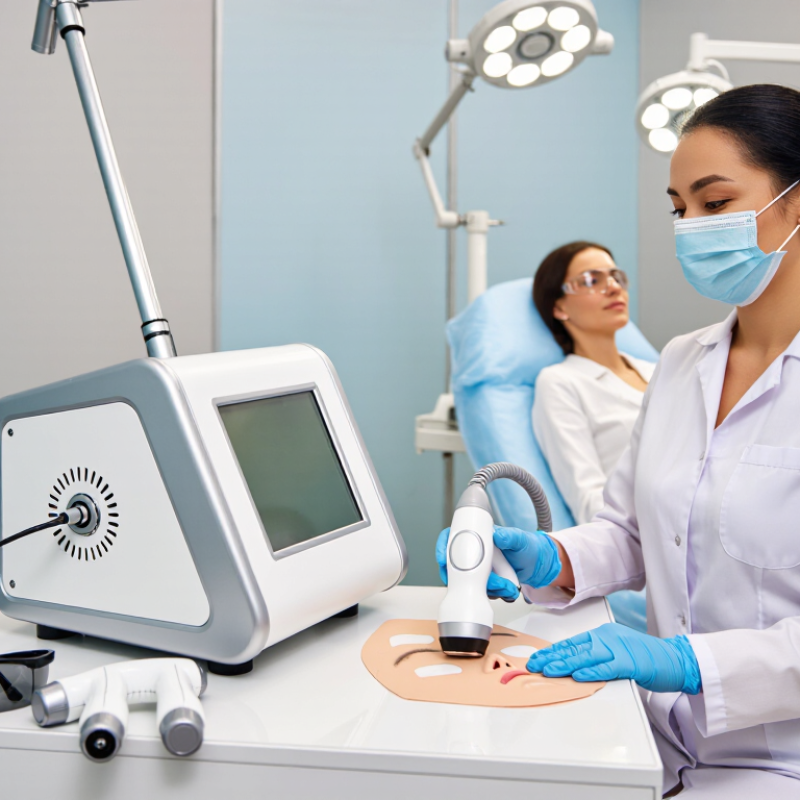
The best hair removal laser machine is not simply the strongest one. It must match skin tone, hair thickness, treatment area, and operator skill. In practice, wavelength selection matters. Alexandrite lasers often suit lighter skin, while diode or long-pulsed Nd:YAG systems may offer safer options for darker skin. Cooling is equally important. It should feel like a brief cold snap, not uncontrolled burning.
According to the American Academy of Dermatology, patients commonly need six or more treatments for meaningful reduction. Results also vary by hormones, hair colour, and growth cycle. The U.S. Food and Drug Administration defines “permanent hair reduction” as a stable reduction measured at six, nine, and twelve months, not complete hair removal. That distinction matters.
Look for adjustable fluence, pulse duration, spot size, and reliable skin-contact cooling. A built-in skin-tone reader can reduce avoidable errors, but it cannot replace professional assessment. A 2023 review in Lasers in Medical Science also emphasized individualized settings and consistent treatment intervals for safer outcomes. A test patch should be routine.
Not every powerful machine is suitable.
Some devices advertise fast results, yet poor calibration may cause burns, pigmentation changes, or patchy regrowth. Even experienced practitioners can misjudge recently tanned skin. I would question any supplier promising permanent results after one session. The better choice is measurable, serviceable, and supported by training records, maintenance logs, and transparent clinical evidence.
What Is the Best Hair Removal Laser Machine?
The best choice depends on skin tone, hair color, treatment area, cooling performance, pulse control, and operator experience. Wavelength is one of the most important technical factors because it affects how selectively the laser targets melanin in the hair follicle.
Typical hair-removal laser wavelengths shown: Alexandrite 755 nm, Diode 810 nm, and Nd:YAG 1064 nm. Actual treatment settings vary according to skin type, hair characteristics, body area, and device design.
Skin-Tone Compatibility
Alexandrite systems are commonly selected for lighter skin, while Nd:YAG is often preferred for darker or recently tanned skin because its longer wavelength penetrates deeper and generally reduces epidermal melanin absorption.
Cooling Performance
Contact cooling, chilled air, or a cooling spray can improve comfort and help protect the skin during treatment. Effective cooling is especially important when higher energy settings are required.
Adjustable Parameters
A versatile machine should allow precise adjustment of fluence, pulse duration, repetition rate, and spot size so treatments can be adapted to different hair thicknesses and body areas.
How Different Laser Technologies Remove Unwanted Hair
What Is the Best Hair Removal Laser Machine?
The “best” machine depends on wavelength, skin tone, hair thickness, and treatment area. Alexandrite lasers use 755 nm light and often work quickly on lighter skin with dark hair. Diode systems, commonly around 800–810 nm, offer broader flexibility. Nd:YAG lasers use 1,064 nm light and are often selected for darker skin, because longer wavelengths reduce surface melanin absorption. This still requires careful settings.
Hair grows in cycles. Lasers mainly affect hairs in the active growth phase, so several sessions are normally needed. Clinical reviews commonly report long-term hair reduction rather than complete removal. The U.S. Food and Drug Administration also defines “permanent hair reduction” as stable reduction over time, not perfectly smooth skin forever. That distinction matters. The Global Industry Analysts 2024 report estimated the global laser hair removal market at more than US$1 billion, showing strong demand, but market growth does not prove every device performs equally.
A qualified operator checks skin response with a test spot, then adjusts fluence, pulse duration, and cooling. Darker skin can burn or develop pigment changes when settings are careless. Blonde, red, gray, or very fine hair may respond poorly because it contains less melanin. IPL is often confused with laser, but it uses broad-spectrum light rather than one focused wavelength. No device wins every case. Even professional reports sometimes simplify real treatment outcomes. Good records, honest expectations, and patient follow-up remain more useful than impressive specifications.
Which Skin and Hair Types Suit Each Laser System?
What Is the Best Hair Removal Laser Machine?
The best system depends on skin tone, hair color, thickness, and treatment area. No single wavelength suits everyone.
Alexandrite systems often suit lighter skin with dark, coarse hair. They can work quickly on large areas, such as legs or the back. They require careful settings on recently tanned skin. Diode systems offer flexible treatment for light to medium skin tones and dark hair. They are often useful for underarms, bikini areas, and facial hair. Comfort depends on cooling, pulse settings, and the operator’s technique.
Nd:YAG systems usually provide a safer option for deeper skin tones, including many Fitzpatrick V and VI clients. They can reduce risk from excess surface pigment, but treatment may feel warmer. Results can be slower when hair is fine. Very light blonde, red, gray, or white hair contains little target pigment, so laser response may be limited. IPL is not a laser, though some clinics use it for similar goals. It may suit selected lighter skin types but demands careful screening.
A consultation should review medications, tanning, hormonal changes, and previous reactions. Patch testing matters. A trained practitioner should adjust fluence, pulse duration, and cooling for each area. These categories help, but they are not perfect. Skin can react differently than expected. Conservative settings may require more sessions, while aggressive settings can increase complications. Honest follow-up is more reliable than impressive claims.
What Is the Best Hair Removal Laser Machine? - Which Skin and Hair Types Suit Each Laser System?
| Laser System | Typical Wavelength | Best-Suited Skin Types | Best-Suited Hair Types | Main Advantages | Important Limitations and Risks | Typical Treatment Areas |
|---|---|---|---|---|---|---|
| Ruby Laser | 694 nm | Very light skin, generally Fitzpatrick I–II | Dark brown to black, coarse or medium hair | Strong absorption by melanin can provide effective treatment for high-contrast skin and hair. | Higher melanin absorption increases the risk of burns, blistering, and pigment changes. Generally unsuitable for tanned or darker skin and ineffective on blonde, red, gray, or white hair. | Small areas such as the upper lip, chin, underarms, and bikini line. |
| Alexandrite Laser | 755 nm | Light to light-medium skin, commonly Fitzpatrick I–III; selected IV cases require conservative settings and expert assessment | Dark brown or black hair; works particularly well on coarse hair | Fast treatment speed and strong melanin absorption; often effective for large areas and finer dark hair. | Requires careful cooling and parameter selection on darker or recently tanned skin. Usually ineffective on gray, white, very light blonde, and many red hairs. | Legs, back, chest, arms, underarms, bikini area, and face when appropriate. |
| Diode Laser | Approximately 800–810 nm | Light to medium-dark skin, commonly Fitzpatrick I–V; settings must be adjusted for skin tone | Medium-brown to black hair, especially coarse and deeply rooted hair | Versatile wavelength with a balance between epidermal safety and follicle penetration; suitable for many body areas. | May be less efficient for very fine or lightly pigmented hair. Darker or tanned skin requires appropriate cooling, pulse duration, and energy selection. | Most body areas, including legs, back, chest, arms, underarms, and bikini area. |
| Long-Pulsed Nd:YAG Laser | 1064 nm | Medium to deep skin tones, commonly Fitzpatrick IV–VI; also useful when tanning is present after professional assessment | Coarse, dark brown, or black hair with sufficient pigment | Lower epidermal melanin absorption provides a comparatively favorable safety profile for darker skin types; penetrates deeply into the follicle. | Often less effective and more uncomfortable for fine or lightly pigmented hair. Conservative treatment and effective cooling remain essential. | Large body areas, underarms, bikini area, legs, back, and coarse facial hair. |
| Dual-Wavelength System | Commonly combines approximately 755 nm and 1064 nm, or 810 nm and 1064 nm | Can cover a wider range from light to dark skin when the correct wavelength and parameters are selected | Dark hair ranging from finer hair to coarse hair; performance depends on the selected wavelength | Greater treatment flexibility for clinics serving different skin tones, body areas, and hair thicknesses. | Having multiple wavelengths does not eliminate safety risks. Incorrect settings, inadequate cooling, or treating tanned skin can still cause adverse effects. | Face and body areas requiring different penetration depths or melanin-safety profiles. |
| Triple-Wavelength System | Often combines approximately 755 nm, 810 nm, and 1064 nm | Potentially suitable for a broad range of Fitzpatrick I–VI skin types when operated by a trained professional | Dark hair with different thicknesses and follicle depths; the darkest wavelength is generally preferred for deeper follicles and darker skin | Combines shallow, medium, and deeper penetration profiles in one platform; may improve workflow flexibility. | Results depend on fluence, pulse duration, spot size, cooling, hair characteristics, and operator skill—not wavelength count alone. | Most facial and body areas, subject to individual skin and hair assessment. |
| IPL Hair-Reduction System (not a laser) | Broad-spectrum filtered light, commonly within approximately 光 500–1200 nm depending on the filter | Usually light to medium skin with sufficient contrast between skin and hair; darker skin requires a device and protocol specifically cleared for that use | Dark brown to black hair; generally less effective than lasers for very fine hair | Large treatment spot sizes and broad-spectrum flexibility; can be useful for gradual hair reduction. | Not technically a laser. Greater risk of unwanted heating when skin contains more melanin. Usually ineffective on white, gray, or very light blonde hair. | Legs, arms, underarms, bikini area, and other suitable body areas. |
| Practical selection note: The most suitable system is determined by skin phototype, recent tanning, hair color, hair thickness, follicle depth, treatment area, cooling performance, and operator experience. Laser hair removal targets melanin, so it generally has limited or no effect on white, gray, and very light blonde hair. A patch test, medical screening, eye protection, and compliance with local regulations are essential before full treatment. | ||||||
What Safety and Comfort Features Should a Machine Include?
A good hair removal laser machine should make safety measurable, not merely promise comfort. Look for adjustable fluence, pulse duration, and spot size. These controls help practitioners match treatment to skin tone, hair thickness, and body area. A built-in skin-temperature sensor is valuable because overheated skin can react before discomfort becomes obvious. Cooling should continue before, during, and after each pulse.
Comfort matters, but pain reduction must not hide poor settings. Contact cooling, chilled air, or a cooled sapphire window can protect the epidermis and reduce the hot-snap sensation. The machine should also include eye protection guidance, emergency shutoff, treatment logs, and clear contraindication screening. IEC 60601-1 addresses electrical safety, while ISO 14971 supports systematic medical-device risk management. These standards do not replace clinical judgment.
The American Society for Dermatologic Surgery’s 2023 Consumer Survey continued to identify hair removal as a common aesthetic treatment interest. However, survey interest is not proof of clinical safety. The FDA’s MAUDE database also shows why adverse-event reporting needs context: reports are valuable signals, but they do not provide a true complication rate. I would inspect those limitations carefully. A perfect machine does not exist. A safer choice offers documented testing, trained-user controls, and conservative settings for darker or recently tanned skin. Each session should include a patch test, protective eyewear, and written aftercare. Pain is feedback, not a performance score.
How to Compare Performance, Cost, and Professional Applications?
What Is the Best Hair Removal Laser Machine?
Choosing the best hair removal laser machine starts with clinical purpose, not a glossy specification sheet. In practice, compare fluence, pulse duration, spot size, cooling, and wavelength options. These controls affect treatment speed, comfort, and suitability for different skin and hair types. A wider spot may treat legs faster, while precise adjustment matters around the face. Ask for measured output data, service records, and safety training requirements. Marketing claims alone are weak evidence.
Cost includes more than the purchase price. Calculate installation, protective equipment, maintenance, replacement parts, training, and downtime. A low-cost unit can become expensive when calibration is delayed or support is unavailable. Request a written warranty and realistic response times. Review the machine’s expected service life, but treat estimates carefully. They are not guarantees. Track consumable use per session and compare that figure with local treatment fees. Your actual patient volume matters more than an attractive spreadsheet.
Professional application should guide the final choice. A busy clinic may value fast repetition rates and a large spot size. A small practice may need portability and simple controls. Operators should document consultations, skin assessment, test spots, settings, and adverse reactions. Follow applicable medical-device rules and training guidance. Results vary, even with identical settings. Teams often focus on speed and overlook ergonomics, staff fatigue, or inconsistent cooling. That mistake can quietly reduce treatment quality. Review performance after several months.
