
Best Face Spa Manufacturers in China for Global Buyers
For global buyers, choosing a face spa manufacturer in China is not simply a price comparison. The right partner must balance device performance, production consistency, communication, and after-sales support. A polished sample is useful, but it cannot tell you everything about a factory’s everyday quality controls.
Dermatologist and skincare entrepreneur Dr. Howard Murad has said, “Your skin is a reflection of your overall health.” That principle is a helpful reminder: face spa equipment should support careful, responsible skincare rather than promise dramatic results. Buyers should examine treatment functions, materials, user instructions, and maintenance requirements. Ask how the manufacturer checks water flow, temperature stability, electrical safety, and each unit’s finish. Request clear product specifications and applicable test records. Then compare them with the exact model offered.
Details matter. Inspect the handle in your hand. Listen to the pump. Check whether the water tank is easy to remove and clean. Small differences can shape daily use. They can also reveal gaps between a sample and a production order.
This guide introduces manufacturers for international buyers and outlines practical questions for supplier evaluation. Compare minimum order quantities, customization options, lead times, packaging, and warranty terms in writing. Verify claims independently, and arrange a sample review when possible. No shortlist is perfect. A supplier may look strong on paper yet respond slowly once questions become specific. That deserves attention, too. The goal is not to find the loudest promise, but a capable partner whose product, documentation, and support fit your market and customers.
Overview of China’s Face Spa Equipment Manufacturing Industry
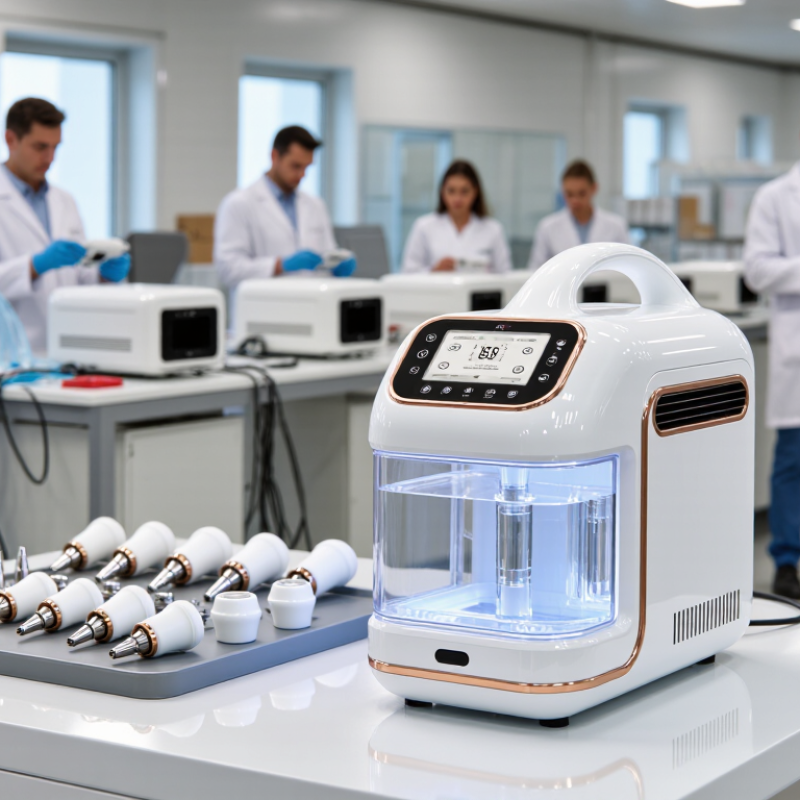
China’s face-spa equipment manufacturing base includes factories making facial cleansing devices, hot-and-cold tools, ultrasonic units, and treatment beds. Production often combines plastic molding, circuit-board assembly, wiring, and final testing. The details matter: a loose connector or inconsistent temperature control can affect daily use. China’s National Bureau of Statistics reported that manufacturing value added represented 26.2% of GDP in 2023. This is useful context, not a measure of face-spa equipment output. Public data do not neatly isolate this product category.
Demand is growing, but broad market figures need careful reading. Grand View Research estimated the global beauty devices market at USD 50.9 billion in 2023 and projected an 8.3% compound annual growth rate from 2024 to 2030. That figure covers more than facial spa equipment, so it should not be treated as a China-specific sales estimate. One gap remains: public reports rarely separate professional salon machines from smaller home-use devices.
For overseas buyers, factory evaluation should go beyond product photos. Request test records for output stability, temperature accuracy, electrical safety, and repeated-use performance. Check whether sample units match the production specification, including cable length, handpiece weight, and replaceable-part availability. Ask for clear maintenance instructions and a record of design changes. A polished showroom is not enough. Calibration and after-sales documentation can still vary between suppliers.
Main Types of Face Spa Equipment Made in China
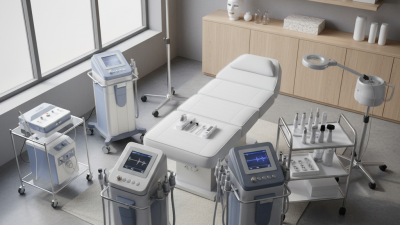
Chinese manufacturers produce several distinct types of face spa equipment, from compact cleansing tools to multi-function salon consoles. Common categories include ultrasonic skin scrubbers, hydrodermabrasion systems, LED light panels, radio-frequency devices, microcurrent tools, and oxygen-infusion units.
Some consoles combine several functions, with handpieces arranged beside a touchscreen and water or serum bottles. More features do not automatically mean better treatment. Operators should check adjustable settings, cleaning steps, spare-part access, and clear user instructions.
Grand View Research estimated the global beauty devices market at about USD 49.2 billion in 2023, reflecting broad demand for beauty technology rather than face spa machines alone.
The Global Wellness Institute reported that the wider wellness economy reached USD 6.3 trillion in 2023; that figure offers context, not a direct equipment-sales measure.
The distinction matters. Buyers comparing Chinese suppliers should request model-specific specifications, test reports, and sample demonstrations, then assess whether the device suits their service menu.
Category names can be vague. “Hydro” alone says little about pump design, water flow, or routine maintenance—and that’s an easy detail to overlook.
How to Evaluate Face Spa Manufacturers for Global Markets
When evaluating a face spa manufacturer for global markets, look beyond polished product photos. Ask how each unit is assembled, tested, and recorded before shipment. A capable supplier should explain core specifications clearly, including output settings, treatment modes, materials, and cleaning requirements. Request a current product sample or arrange a live production inspection. Check the finish around handpieces, cable strain relief, buttons, and display edges. Small flaws matter. They can signal rushed process control, though one sample cannot represent every batch. Ask for inspection records and how defects are handled.
Export readiness is equally practical. Confirm that manuals, labels, packaging, and market-specific documents can be prepared for your destination. Do not accept vague claims such as “international standard”; request document names and issuing details, then verify them independently. Ask about lead times, spare parts, warranty terms, and technical support across time zones. A showroom can impress. It can also distract. For customized controls or packaging, confirm what changes require re-testing and who pays. Put response times and replacement-part availability in writing. No checklist catches everything.
Key Compliance and Quality Checks for International Buyers
International buyers should assess a face spa manufacturer through records and production evidence, not polished catalogues alone. Ask for current quality-management documents, product specifications, and traceable batch records. Details matter. Compare the factory’s declared processes with the exact model and materials offered. A certificate may cover only a site or product category, so verify its scope and validity with the issuing body.
For powered facial equipment, review electrical safety reports, warnings, and instructions for the destination market. For skincare products, check ingredient lists, safety assessments, stability data, and label language where applicable. Requirements differ by country. Keep records. Request a pre-shipment inspection plan covering function, appearance, packaging, and carton marks. On a sample, test the controls, cable strain relief, surface finish, and whether instructions match actual operation.
Ask how the manufacturer handles complaints, corrective actions, and supplier changes. Traceability should connect a finished unit or batch to its materials and inspection results. A small pilot order can reveal inconsistent finishes, confusing labels, or slow documentation. Paperwork can look complete while a batch still varies; check real production samples, not just approval samples. No check removes all risk, and some checks are easy to rush. Record each finding against the purchase specification.
Steps for Sourcing Face Spa Equipment from China
Sourcing face spa equipment from China starts with a clear treatment list, not a supplier catalogue. Specify functions, such as cleansing, cooling, or facial massage, plus voltage, room size, and daily treatment volume.
The Global Wellness Institute’s 2024 Global Wellness Economy Monitor valued the global wellness economy at $6.3 trillion in 2023 and projected $9 trillion by 2028.
That signals opportunity, but it does not prove demand for any particular device.
Shortlist factories that can explain their production process and show relevant test records. Ask for a live factory walkthrough, a parts list, warranty terms, spare-part availability, and written specifications. Request a sample unit and test it under realistic conditions: check noise, heat, controls, cleaning, and setup time.
Small details matter. A glossy brochure cannot replace a hands-on trial.
Before ordering, confirm the product’s intended-use classification and documentation needs in your destination market with a qualified local adviser. Compare quotations on the same basis, including packaging, shipping terms, lead time, and after-sales support.
McKinsey’s 2024 wellness survey found that 82% of US consumers considered wellness a top or important priority, but broad interest is not a purchase forecast. This part is easy to rush. I would also record defects during the sample test; the notes may be imperfect, but they make supplier comparisons more honest.
Related Posts
-
How to Choose the Best Facial Spa Supplier?
-
2026 Top Facial Salon Equipment Suppliers?
-
Top 10 Esthetician Machines You Need for Your Salon Business?
-

What Is a Facial Spa and Which Type Is Best?
-

Top 10 Essential Tips for Effective Skin Facial Care at Home
-

Top 10 Best Facial Places for Glowing Skin: Where to Get the Perfect Glow