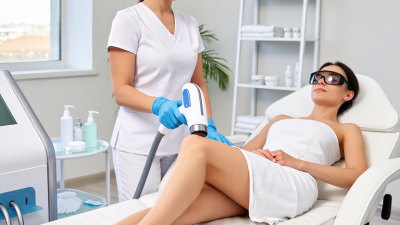
Top 10 Types of Laser Hair Removal Spa Equipment
Choosing equipment for a laser hair removal spa involves more than comparing power ratings or sleek console designs. The right system must suit the clinic’s services, staff training, treatment room, and client needs. Device performance can vary with wavelength, pulse settings, spot size, and cooling method. Details matter.
This guide introduces ten common types of hair-removal equipment, including diode, alexandrite, and Nd:YAG laser systems, along with different platform and cooling configurations. Each has practical trade-offs. Some systems may suit particular hair and skin characteristics better than others, but no device works identically for every client. A consultation and careful assessment help set realistic expectations. Not every system fits.
For a spa owner, the purchase decision also includes less visible details: maintenance access, manufacturer support, clear operating instructions, and protective eyewear appropriate to the equipment. Staff should receive suitable training and follow the device’s stated protocols. A polished brochure is not enough. Treatment outcomes and comfort depend on sound technique, honest communication, and consistent aftercare guidance. Specifications still need scrutiny.
This overview is a starting point, not a substitute for professional training or individualized assessment. It also cannot rank every device for every business; local service needs and budgets differ. Some choices may look obvious on paper, then feel less practical in a busy treatment room. That takes judgment. The sections ahead explain what distinguishes each equipment type and which questions are worth asking before making an investment.
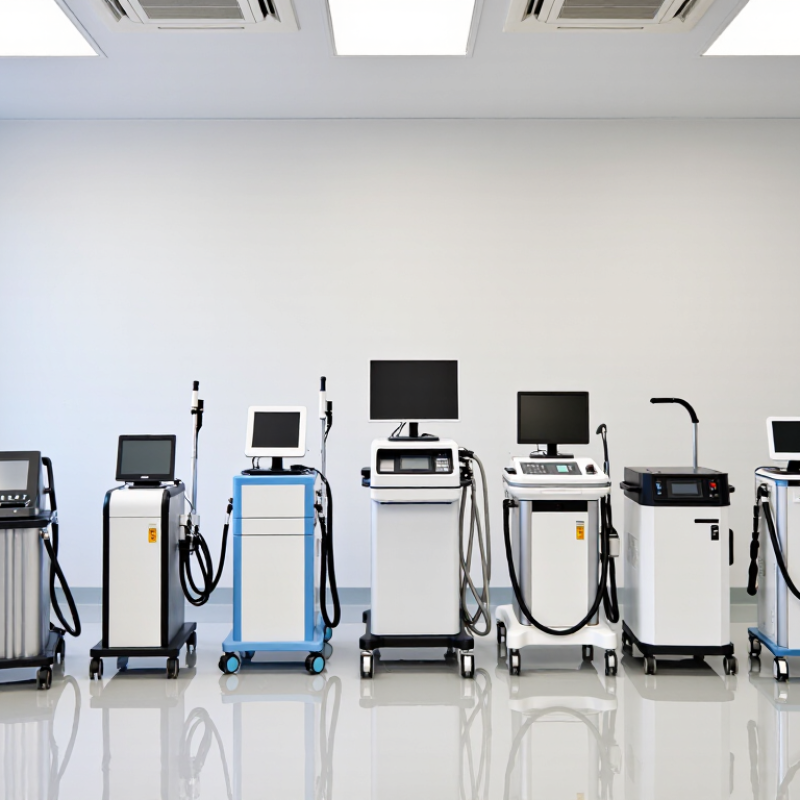
Classify 10 Spa Platforms by Laser Medium, Wavelength, and Delivery Mode
Spa platforms are best classified by laser medium, wavelength, and delivery mode. A practical ten-type map includes ruby at 694 nm; alexandrite at 755 nm; single-wavelength diode near 800–810 nm; multi-wavelength diode; long-pulsed Nd:YAG at 1064 nm; dual alexandrite–Nd:YAG systems; triple-wavelength systems combining 755, 808, and 1064 nm; contact-cooled diode platforms; in-motion diode platforms; and broadband IPL. IPL is not a laser, though spas often compare it with laser hair-removal equipment. These categories overlap: cooling and motion describe delivery, not a separate laser medium.
Wavelength affects how energy interacts with hair pigment and skin. Longer-wavelength Nd:YAG systems are often considered for darker skin tones, while device settings and operator assessment still matter. The American Academy of Dermatology notes that several sessions are typically needed; treatment plans vary by body area and individual response. For market context, Grand View Research estimated the global laser hair-removal market at about USD 1.04 billion in 2023. That figure signals demand, not proof that one platform performs better.
Tips: Compare spot size, pulse duration, cooling method, and available wavelengths—not just the label. Ask how staff assess skin tone and hair color before treatment. Keep records. They help, though they do not remove every uncertainty.
Ruby 694 nm, Alexandrite 755 nm, Diode 800–810 nm, and Nd:YAG 1,064 nm
Ruby lasers use 694 nm light, while alexandrite systems use 755 nm. Diode devices commonly operate at 800–810 nm, and Nd:YAG systems use 1,064 nm. Wavelength matters. These wavelengths interact differently with melanin and penetrate to different depths, so equipment choice should reflect skin tone, hair color, and treatment area. Ruby and alexandrite light is more strongly absorbed by melanin; Nd:YAG is often considered for darker skin tones because it targets deeper tissue with less epidermal melanin absorption. Diode systems sit between these options, but settings and cooling still matter.
The evidence is not a guarantee. A systematic review by Haedersdal and Wulf in the Journal of the European Academy of Dermatology and Venereology reported hair reductions ranging from 20% to 75% at six months across studies of laser and light-based treatments. Results varied by device, protocol, and study design. A trained operator should assess skin and hair before treatment, use appropriate eye protection, and monitor skin response. A small test area can help reveal unexpected reactions. Even careful selection cannot promise identical results for every person; that uncertainty deserves honest discussion, not a sales claim.
Top 10 Types of Laser Hair Removal Spa Equipment — Ruby 694 nm, Alexandrite 755 nm, Diode 800–810 nm, and Nd:YAG 1,064 nm
| Equipment Type | Typical Wavelength | Laser Source or Configuration | Typical Treatment Considerations | Practical Notes |
|---|---|---|---|---|
| Long-pulsed ruby laser | 694 nm | Ruby crystal laser | Generally best suited to lighter skin tones with dark, coarse hair. Greater epidermal melanin absorption calls for careful patient selection. | Less commonly used for hair removal today. Not usually preferred for darker or recently tanned skin because of increased pigment-related risk. |
| Alexandrite laser | 755 nm | Alexandrite crystal laser | Often used for dark hair on lighter skin tones. Suitability depends on skin pigmentation, hair characteristics, settings, and cooling. | Its relatively strong melanin absorption can make conservative settings and careful assessment important for more deeply pigmented skin. |
| Diode laser, approximately 800 nm | About 800 nm | Diode semiconductor laser | Used for dark hair across a range of skin tones, with treatment parameters selected for the individual. | Performance depends on pulse duration, spot size, fluence, cooling, and operator technique—not wavelength alone. |
| Diode laser, 810 nm | 810 nm | Diode semiconductor laser | A widely used wavelength for reducing dark, pigmented hair. Skin type and tanning history should guide treatment settings. | Contact or other epidermal cooling is commonly used to improve comfort and protect the skin. |
| High-power or stacked-diode system | Typically around 800–810 nm | Multiple diode emitters or diode bars delivering energy through a treatment handpiece | May be configured for larger treatment areas and repeated passes. Appropriate settings vary by body site and patient. | Check the device’s actual wavelength, pulse options, spot size, cooling method, and regulatory status; “high power” alone does not establish effectiveness. |
| Triple-wavelength diode system | Commonly combines 755, 810, and 1,064 nm | Multiple diode wavelengths delivered together or through a combined handpiece | Designed to offer different absorption and penetration characteristics. The combination does not guarantee suitability for every skin or hair type. | Confirm whether wavelengths are emitted simultaneously or separately and review the available treatment parameters and clinical protocols. |
| Long-pulsed Nd:YAG laser | 1,064 nm | Neodymium-doped yttrium aluminum garnet (Nd:YAG) laser | Often selected for darker skin tones because this wavelength is less strongly absorbed by epidermal melanin than shorter hair-removal wavelengths. | May be less effective on fine or lightly pigmented hair. Skilled assessment and appropriate cooling remain important. |
| Variable-pulse Nd:YAG system | 1,064 nm | Nd:YAG laser with adjustable pulse duration and treatment settings | Adjustable parameters allow treatment planning for different hair thicknesses and body areas, including patients with more deeply pigmented skin. | Longer wavelength does not eliminate the possibility of burns or pigment changes; treatment must be individualized. |
| Dual alexandrite–Nd:YAG platform | 755 nm and 1,064 nm | Two laser sources or selectable wavelengths in one platform | Can provide a shorter wavelength option for suitable lighter skin and a longer wavelength option when clinically appropriate for darker skin. | The operator should select the wavelength based on skin tone, tanning, hair, and treatment area—not simply switch wavelengths without assessment. |
| Multi-wavelength laser platform | May combine 694, 755, 800–810, and/or 1,064 nm | Multiple laser sources or wavelength modules in one system | Offers a choice of wavelength families for different patient and treatment needs; outcomes still depend on hair pigment, skin type, parameters, and technique. | Verify which wavelengths are true laser emissions. Intense pulsed light (IPL) is not a laser, even when included in a multi-technology platform. |
Note: These are equipment categories, not a ranking of clinical superiority. Laser hair reduction works best on pigmented hair; white, gray, blonde, and many red hairs may respond poorly. Suitability and settings require assessment by a qualified practitioner, and results vary between individuals.
Compare Long-Pulsed, Multi-Wavelength, SHR, and Home-Use Diode Systems
Long-pulsed systems deliver energy in controlled pulses to target pigment within the hair. Their wavelength matters: different wavelengths interact differently with skin pigment and hair. A trained provider should assess skin tone, hair color, treatment area, and recent tanning before selecting settings. A patch test can reveal unexpected skin responses. It is not a guarantee.
Multi-wavelength systems combine options, often including 755, 810, or 1064 nanometers. This flexibility can help providers adapt treatments to varied skin and hair characteristics. But more wavelengths do not automatically mean better results. Cooling, pulse settings, operator training, and careful maintenance matter too. The categories overlap, which makes equipment comparisons less tidy than brochures suggest.
SHR describes a repeated, lower-energy delivery approach, rather than one specific wavelength. It may feel warmer and more gradual than isolated high-energy pulses, though comfort varies by person and device. Home-use diode systems typically operate at lower output than professional equipment and may require consistent sessions. They are not direct substitutes for spa systems. Check the device instructions, use eye protection as directed, and avoid treating irritated or recently tanned skin. Small details matter.
Distinguish IPL’s Typically 500–1,200 nm Spectrum from Laser Equipment
Spa equipment lists often place IPL beside laser systems, but their light is not interchangeable. IPL typically delivers filtered, broad-spectrum light across about 500–1,200 nm. The exact range depends on the filter and device. A laser emits a much narrower wavelength band, usually designed for a specific target. That distinction matters when comparing treatment settings, not just product labels.
Common hair-removal laser wavelengths include 755 nm alexandrite, roughly 800–810 nm diode, and 1,064 nm Nd:YAG. These figures are reported in clinical literature, including Haedersdal and Wulf’s evidence-based review in the Journal of the European Academy of Dermatology and Venereology (2006). IPL’s broad output can cover a wider range, but it does not make every wavelength equally effective. Skin tone, hair color, cooling, and filter choice all affect how energy reaches the follicle. Small details matter. A device chart may look precise, yet real skin varies; that is easy to underestimate. Compare the stated spectrum with clinical protocols and training, rather than treating “IPL” as one fixed wavelength.
Match Fitzpatrick I–VI Skin Types with Fluence, Pulse Duration, and Cooling
Fitzpatrick types I–III usually tolerate shorter pulses and higher fluence than darker skin, but settings remain device-specific. Types IV–VI contain more epidermal melanin, which can absorb treatment energy and raise burn risk. A review by Haedersdal and Wulf in the Journal of the European Academy of Dermatology and Venereology (2006) found that laser and light-source outcomes vary by technology and treatment protocol. There is no safe universal fluence chart. A test spot matters.
For types I–III, alexandrite or diode systems may suit coarse, dark hair; use fluence that produces temporary perifollicular redness without blistering. For types IV–VI, longer-wavelength 1064-nm Nd:YAG systems generally reduce epidermal melanin absorption. Practitioners often choose longer pulse durations and cautious fluence, then adjust after observing the skin. Cooling is not optional decoration. Use contact cooling or chilled air to protect the surface, especially over the upper lip or jawline. Fitzpatrick type is only a sun-response category, not a precise melanin measurement.
Keep records of wavelength, fluence, pulse duration, spot size, cooling method, and skin response at each visit. The American Academy of Dermatology reports that most patients need two to six treatments, with maintenance sometimes needed. That range is a useful planning figure, not a promise. If redness persists or pigment darkens, pause and reassess before increasing energy. A rushed setting change is hard to defend.
Related Posts
-
What Is a Laser Hair Removal Spa?
-
2026 Best Radiance Skin Care Products For Glowing Skin?
-
Top 10 Benefits of Laser Hair Removal Spa Treatments?
-

2026 How to Find Effective Skin Care Solutions?
-
Discover the Best Aesthetic Spa Options in China for Global Buyers
-
What is a Facial Salon and How Can It Benefit You?