Skip to content
Policy FAQ
   
(908) 210-9335
   
Now Available: Cherry Payment Plans!
Are you interested in paying in installments with Cherry payment plans? Get pre-approved today! Applying won’t harm your credit!
graphical user interface, website

10 Best Skin Facial Machines for Global Buyers

Global demand for professional skin facial treatments is growing alongside the wider wellness economy. The Global Wellness Institute’s 2024 Global Wellness Economy Monitor valued that economy at $6.3 trillion in 2023 and projected $9 trillion by 2028. This figure covers many sectors, not facial machines alone. It signals a larger market, but it does not prove that every device will sell.

For global buyers, choosing among the 10 best skin facial machines means looking beyond glossy product photos. Consider treatment functions, adjustable settings, training requirements, service support, and the availability of replacement parts. Check whether the supplier provides clear operating instructions and realistic performance claims. A cool metal handpiece, a tidy control panel, and a responsive service contact matter more in daily use than dramatic promises. Small details count.

Dermatologist Dr. Joshua Zeichner has emphasized, “The best anti-aging product is sunscreen.” His point is a useful reminder: devices belong within responsible skincare, not in place of sound clinical judgment or basic skin protection. The right machine depends on the buyer’s clients, staff skills, and treatment goals. There is no universal winner. A polished specification sheet can still leave important questions unanswered, and that is worth acknowledging. Compare evidence, ask suppliers specific questions, and verify claims before investing. This guide examines leading options through that practical lens, helping global buyers assess suitability rather than chase hype.
10 Best Skin Facial Machines for Global Buyers

What Skin Facial Machines Are and How They Work

Skin facial machines are devices designed to support cleansing or deliver energy to the skin. Common types use LED light, gentle electrical current, ultrasound, or radiofrequency. Each works differently. LED devices expose skin to selected light wavelengths, while microcurrent devices send low-level electrical signals through contact points. Ultrasound uses sound waves, and radiofrequency creates controlled heat in targeted tissue. Designs and settings vary, so two machines may not produce the same experience.

These tools are not all-purpose treatments. A cleansing brush may help lift surface residue, but excess pressure can leave skin irritated. Light and heat-based devices require careful use, especially around sensitive areas. Some people should avoid certain technologies or seek professional advice first. Evidence and expected results differ by device and purpose. Marketing can sound more certain than the research; that is worth questioning. A facial machine is not a substitute for medical care.

Tips: Read the operating instructions before use. Start with clean, dry skin if the device requires it, and use the lowest suitable setting. Keep the device moving when directed; lingering over one spot can cause discomfort. Stop if you feel burning or persistent irritation. Check cleaning requirements, too: residue around a treatment head is easy to miss.

Core Technologies Behind Modern Facial Treatment Devices

Modern facial treatment devices rely on several distinct technologies, not one universal method. Radiofrequency systems deliver controlled energy to deeper skin layers, creating warmth that operators monitor during treatment. Ultrasound uses sound waves, while microcurrent devices apply low-level electrical stimulation through conductive probes. Each approach has different operating limits and training needs.

LED panels use selected wavelengths of light, and hydrodermabrasion devices combine fluid flow with surface cleansing. These functions may appear together in one machine, but more features do not automatically mean better results. Comfort matters. For buyers, useful details include adjustable intensity, clear treatment timers, stable handpieces, and accessible maintenance instructions. A device’s screen should show settings plainly, even when the room is dim.

Sensors can help track contact, temperature, or output, depending on the system. Still, a sensor cannot replace careful assessment of skin condition, treatment goals, and individual tolerance. In practice, settings are not always as intuitive as product materials suggest. That deserves scrutiny. Ask how operators are trained, what cleaning steps are required between clients, and how performance is checked over time. These practical details can matter as much as the headline technology.

Criteria for Comparing Facial Machines Across Global Markets

10 Best Skin Facial Machines for Global Buyers

Criteria for Comparing Facial Machines Across Global Markets

Choosing a facial machine for an international market takes more than comparing its treatment list. Check whether its voltage and plug match the destination, and confirm that replacement parts are available nearby. A unit that performs well in a showroom may be difficult to maintain when a cable or handpiece needs replacing. Small details matter. Compare treatment settings, operating instructions, and cleaning requirements, too. Clear controls and readable labels help staff use equipment consistently, especially in busy treatment rooms.

Tips: Ask for a live demonstration using the exact configuration you plan to buy. Check the warranty terms, service response times, and training materials in the working language. Test it first. Request written specifications, rather than relying on sales descriptions alone.

Comfort and workflow deserve careful attention. Consider the handpiece weight, noise level, session length, and how easily surfaces can be cleaned between clients. Ask what training the supplier provides and whether routine maintenance is explained in practical steps. Technical claims can sound impressive, but they are hard to compare without consistent test conditions. I would not treat a long feature list as proof of better performance. A simple comparison sheet can record verified specifications, service access, and total operating costs for each option. Some details may remain uncertain until the machine is used in a real setting.

Ten Skin Facial Machine Categories Worth Considering

10 Best Skin Facial Machines for Global Buyers

Ten Skin Facial Machine Categories Worth Considering

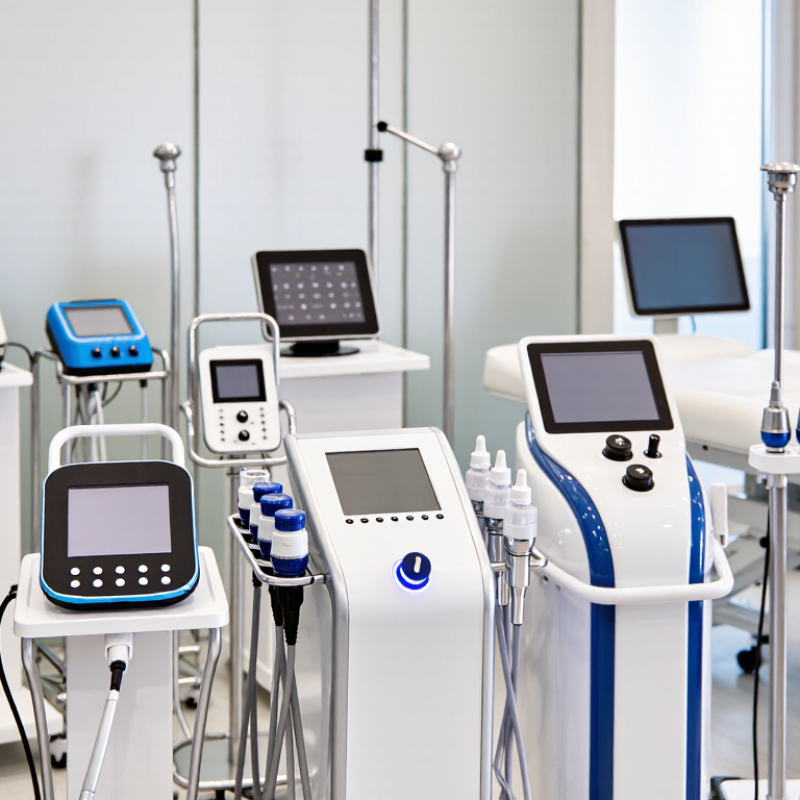
A practical shortlist includes LED phototherapy, microcurrent, radiofrequency, ultrasound, and hydrodermabrasion devices. Each serves a different treatment approach, so compare intended use and operating settings rather than appearance alone. The American Society of Plastic Surgeons’ 2023 Procedural Statistics Report counted 25.4 million minimally invasive procedures in the United States. This signals broad interest in aesthetic treatments, not proven demand for any specific machine.

Other categories include crystal or diamond microdermabrasion, oxygen infusion, electroporation, high-frequency devices, and facial cooling systems. The category labels are not perfectly standardized. Some devices combine functions, while similar names can describe different technical outputs. That gap matters. Review manufacturer specifications, clinical evidence, and service requirements before comparing suppliers. A polished display cannot verify treatment performance.

Tips: Ask for wavelength or energy-output data where relevant, calibration records, cleaning instructions, and written maintenance terms. Check whether consumables are easy to source. Match device settings to staff training and the intended treatment area. Treat marketing claims cautiously; independent evidence for one technology may not apply to another.

Safety, Certification, and Support for International Buyers

When comparing facial machines for international use, look beyond treatment modes and touchscreen features. Ask the supplier for the device’s intended use, operating instructions, and relevant safety test reports. Certification requirements vary by destination and product type, so one certificate may not cover every market. Check that documents match the exact model and manufacturer, not just a similar-looking unit. Details matter. A clear label, traceable serial number, and readable warnings are small signs of careful documentation.

Tips: Before ordering, request manuals in a language your staff can use, plus written guidance on cleaning, maintenance, and operator training. Ask how support works across time zones. Get response times and warranty terms in writing.

Reliable after-sales help matters when a handpiece needs servicing or a software issue interrupts appointments. Confirm which parts are available, who pays shipping, and whether troubleshooting is remote or in person. Keep records of purchase documents, training, and maintenance checks. These steps can make future service easier, though they cannot replace local professional advice. One practical caution: polished sales materials are not proof of safety or performance. Compare claims with the technical file, and pause if answers are vague. A careful review takes time, but rushing a purchase can leave staff without useful support.

Back To Top Skip to content