Top Spa Skin Care Products for Global Buyers
Choosing the right spa skin care products for global buyers requires more than attractive packaging or a pleasant fragrance. Professional purchasers must evaluate ingredients, performance, safety documentation, and supplier reliability. A calming cream may sell well in one region, yet fail elsewhere because of climate, skin preferences, or labeling requirements. No formula fits every market.
Practical experience shows that buyers need evidence before placing large orders. Review the full INCI ingredient list, stability data, microbiological testing, batch records, and shelf-life details. Ask whether the manufacturer follows recognized quality systems and can provide consistent production samples. Packaging also matters. Airless pumps can protect sensitive formulas, while sealed jars may suit thicker masks or scrubs. Small details affect transport, storage, and customer trust.
Regulatory expectations vary. Importers should check local rules for cosmetic ingredients, product claims, language, allergens, and responsible-party information. Claims should remain accurate and supportable. “Hydrating” may be reasonable when testing supports it; “heals eczema” can create serious compliance concerns. Supplier audits, traceable documentation, and responsive communication strengthen purchasing decisions. Still, documentation is not the whole story. Texture, scent, absorption, and real treatment-room feedback can reveal weaknesses that laboratory summaries miss. Test modest quantities first. Then compare repeat performance across different users, seasons, and shipping conditions. Some recommendations may need revision. That is normal. Reliable global sourcing depends on careful evaluation, transparent evidence, and the willingness to question convenient assumptions.
What Defines a Professional Spa Skin Care Product
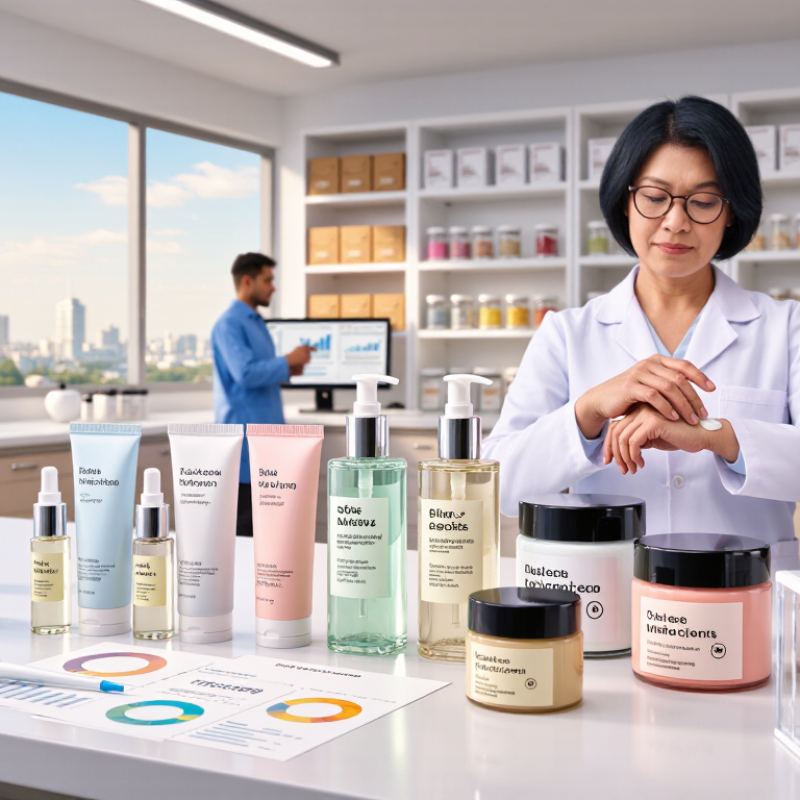
A professional spa skincare product is more than an attractive jar with a pleasant scent. It must perform consistently during repeated treatments, across different skin types and climates. McKinsey’s 2024 Future of Wellness report found that 82% of United States consumers consider wellness a top or important priority. That demand raises expectations for safety, evidence, and sensory quality.
In a treatment room, professionals examine texture, absorption, rinse-off behavior, and packaging control. A precise pump reduces contamination risks. Clear INCI labeling supports responsible ingredient screening. Reliable suppliers should provide batch identification, stability testing, microbiological results, and safety assessments. Manufacturing should follow recognized cosmetic good manufacturing practices, such as ISO 22716 principles. Claims also need restraint. “Hydrates” may be supportable, while “repairs all skin damage” is not. The wording matters.
The Global Wellness Institute valued the wellness economy at 6.3 trillion US dollars in 2023. Spa buyers therefore need products that support both client experience and operational discipline. A cream may feel luxurious, yet excessive fragrance can challenge sensitive clients. A thicker balm may impress during massage, but leave residue on linens. Not always ideal.
Professional quality also includes traceability, responsible packaging, and documented storage guidance. Buyers should request independent evidence instead of trusting dramatic before-and-after images. No formula is perfect. Performance can change with water hardness, temperature, and therapist technique. Careful testing in the intended market remains essential.
Core Product Categories for Different Spa Treatments
Top Spa Skin Care Products for Global Buyers
Core Product Categories for Different Spa Treatments
Professional spas usually need a complete treatment range, not one universal product. Facial treatments require gentle cleansers, hydrating toners, exfoliants, serums, and professional masks. Choose textures that rinse clean and perform consistently under massage or steam. For sensitive skin, fragrance-free formulas with soothing ingredients are safer starting points. Patch testing remains essential.
Body treatments need different support. Scrubs with controlled particles help remove surface buildup without excessive abrasion. Massage oils should provide smooth glide, easy absorption, and low staining risk. Wraps may use mineral, botanical, or clay-based formulas, depending on the treatment goal. Foot care products need rich moisturizers and practical packaging for frequent service use.
Tips: Check ingredient lists, batch numbers, shelf life, and storage instructions before ordering. Request samples for therapist testing. Compare performance on dry, oily, and reactive skin. Ask suppliers for safety documents and export guidance. A beautiful package means little if dispensing is difficult. Small pumps often reduce waste.
Global buyers should also match products with local regulations, climate, and client expectations. Heat can affect oils and emulsions during shipping. Cold conditions may change texture. I have found that simple formulas are often easier to train with, though not always more luxurious. That assumption deserves review. Product records should include supplier details, testing information, and usage instructions for every treatment room.
Key Ingredients and Their Skin Care Functions
Top Spa Skin Care Products for Global Buyers
Effective spa products begin with purposeful ingredients, not attractive packaging. Hyaluronic acid draws water toward the skin’s surface, helping dehydrated complexions feel smoother and more comfortable. Niacinamide supports the skin barrier and may reduce the appearance of uneven tone. Vitamin C offers antioxidant support, although its stability can vary between formulas. This matters during shipping and storage. Gentle exfoliants, such as lactic acid, loosen dead skin cells and improve surface texture. Stronger acids are not automatically better. Sensitive skin may become dry, tight, or irritated. Ceramides help reinforce the barrier, while panthenol can provide soothing, conditioning support. Ingredient concentration matters, but the complete formula matters more.
Tips: Match ingredients to skin needs, climate, and treatment frequency. Check batch information, usage directions, and storage requirements before purchasing. Request reliable technical documents from suppliers. Patch testing remains sensible, even for familiar ingredients. Small details matter.
Spa professionals should assess fragrance, texture, pH, and compatibility with professional treatments. A lightweight gel may suit humid regions, while a richer cream can support dry winter skin. I have found that clients often judge results too quickly. Skin changes need consistent care and realistic expectations. Some formulas look impressive on paper but feel uncomfortable after several applications. That is a useful warning, not a failure. Global buyers should prefer clear ingredient lists, transparent quality controls, and suppliers willing to answer practical questions. Availability can change, so substitute ingredients should be reviewed carefully rather than accepted automatically.
How Global Buyers Evaluate Quality and Safety
Top Spa Skin Care Products for Global Buyers
How Global Buyers Evaluate Quality and Safety
Global buyers look beyond fragrance, texture, and attractive packaging. In supplier reviews, I examine the ingredient list, batch number, manufacturing date, and storage guidance. Clear documentation builds trust. Missing details create immediate doubt.
A reliable supplier should provide test records for microbial safety, stability, and heavy-metal limits where applicable. Buyers should also check whether the product follows cosmetic rules in the target market. Requirements can differ between regions. A product accepted in one country may need revised labeling elsewhere. I have learned that certificates alone are not enough. Their issuing body, testing scope, and date require careful checking.
Tips: Request a recent certificate of analysis and compare it with the actual batch. Inspect sealed containers, readable labels, and tamper-evident packaging. Ask how heat affects the formula during shipping. Test a small quantity first. Patch testing matters, even in professional spa settings. Keep written records of supplier replies and product observations.
Quality is also visible during use. A cream should have consistent color, scent, and texture across samples. Sudden separation is a warning sign. Stronger fragrance does not mean better performance. That assumption deserves review. Ethical suppliers explain limits clearly and avoid exaggerated claims. Global buyers should value honest evidence over impressive promises.
Top Spa Skin Care Products for Global Buyers - How Global Buyers Evaluate Quality and Safety
| Product Category | Primary Spa Use | Typical Quality Indicators | Key Safety Checks | Common Compliance Evidence | Packaging and Export Considerations |
|---|---|---|---|---|---|
| Facial Cleansers | Removal of sebum, makeup, sunscreen and surface impurities before professional treatments. |
Consistent texture
Low residue
Typical pH 4.5–6.5
Stable foam or emulsion, easy rinse-off performance and no phase separation during storage. |
Microbiological testing, preservative efficacy testing where applicable, skin-compatibility assessment and control of fragrance allergens. | Product specification, complete ingredient list using INCI names, batch records, safety assessment and testing aligned with ISO 17516 and ISO 11930 where relevant. | Leak-resistant pump or tube, compatibility testing between formula and container, readable ingredient and usage labels, and protection against temperature extremes during transport. |
| Facial Toners and Essences | Hydration support and preparation of the skin before serums, masks or massage products. |
Clear or uniform appearance
Typical pH 4.0–6.0
Rapid absorption, stable color and odor, and no visible sediment unless intentionally formulated. |
Verification of preservative system, microbial limits, irritation potential of acids or botanical extracts, and allergen declaration for fragrance materials. | Stability data, microbiological test report, raw-material specifications, safety documentation and regulatory label review for the destination market. | Fine-mist sprayers should be tested for clogging and spray consistency. Clear packaging should be assessed for light sensitivity of colorants and active ingredients. |
| Facial Serums and Ampoules | Delivery of concentrated cosmetic ingredients for hydration, skin conditioning, radiance or appearance of fine lines. |
Controlled viscosity
Uniform active distribution
Measured active-ingredient content where applicable, stable color and odor, and documented compatibility of the formula with its container. |
Oxidation and light-sensitivity evaluation, microbial testing, pH control, preservative efficacy and substantiation for any performance claims. | Certificate of analysis for relevant raw materials, finished-product specification, stability study, safety assessment and claim-supporting test data. | Airless pumps, opaque containers or single-dose packaging may reduce exposure to air and light. Small-volume packaging should include accurate batch and expiry or period-after-opening information. |
| Facial Masks | Short-contact hydration, soothing, cleansing or skin-conditioning treatments used in professional protocols. |
Even application
Stable consistency
Typical pH may range from approximately 4.0–7.0 depending on the formula. Sheet masks should have consistent serum loading and substrate quality. |
Microbiological quality, preservative challenge testing for water-based products, irritation assessment and control of exfoliating or absorbent ingredients. | Finished-product test report, ingredient documentation, stability data, safety assessment and instructions describing contact time and removal method. | Sachets and jars require seal-integrity testing. Single-use formats can reduce repeated consumer contact; jars should include a hygienic use instruction or suitable dispensing system. |
| Facial Moisturizers and Massage Creams | Skin conditioning, barrier-supportive moisturization and lubrication during facial massage. |
Smooth emulsion
No oil separation
Typical pH 4.5–7.0
Consistent spreadability, suitable absorption time and stable sensory characteristics across batches. |
Emulsion stability, microbial limits, preservative efficacy, irritation assessment and evaluation of comedogenicity claims if such claims are made. | Stability testing, packaging-compatibility report, product information file or equivalent technical dossier, ingredient list and safety assessment. | Wide-mouth jars need contamination-control instructions. Airless packaging can improve hygiene and reduce repeated exposure. Transport testing should consider heat-related softening or separation. |
| Body Scrubs and Exfoliating Products | Removal of surface dead skin cells and improvement of temporary smoothness and skin feel. |
Uniform particle size
Controlled abrasiveness
Stable suspension or emulsion, consistent exfoliant concentration and no sharp or irregular particles that may damage the skin. |
Abrasion and irritation assessment, microbial testing for water-containing products, rinse-off safety review and evaluation of acid concentration where applicable. | Ingredient specifications, safety assessment, stability data, usage warnings and substantiation for exfoliation or smoothing claims. | Moisture-resistant labels and leak-proof closures are important for bathroom and spa environments. Packaging should tolerate repeated opening and contact with wet hands. |
| Body Lotions and Body Butters | Full-body moisturization and skin conditioning after bathing, exfoliation or massage. |
Consistent emulsion
Good spreadability
Stable viscosity, uniform fragrance profile and no separation after temperature cycling. |
Microbiological quality, preservative efficacy, skin-compatibility review and allergen declaration for fragrance ingredients where required. | Batch testing, stability and transport data, complete ingredient list, safety assessment and destination-market label compliance. | Pumps are convenient for professional use and help minimize direct contact. Bulk formats require dispensing procedures and clear hygiene instructions. |
| Eye-Area Care Products | Conditioning and hydration of the skin around the eyes, which is generally more sensitive than other facial areas. |
Fine, uniform texture
Low odor
Stable formula, controlled viscosity and packaging that supports precise application. |
Specific eye-area safety assessment, microbiological testing, preservative efficacy, packaging cleanliness and careful review of fragrance and essential-oil use. | Safety assessment covering the intended area of use, stability report, microbiological results, ingredient documentation and clear application warnings. | Small orifice tubes and airless pumps can reduce contamination risk. Packaging should prevent accidental contact between the applicator and the skin. |
| Professional Sunscreens | Protection from ultraviolet radiation during outdoor spa services and daily skin-care routines. |
Verified SPF claim
Uniform film formation
Consistent application, acceptable cosmetic feel and stable dispersion of UV filters. |
SPF and broad-spectrum or UVA testing according to the destination market, photostability review, water-resistance testing when claimed, and regulatory review of permitted UV filters. | Market-specific sunscreen test reports, ingredient compliance review, stability data, claim substantiation and legally required product registration or notification where applicable. | UV-sensitive formulas may require protective packaging. Labels should state application amount, reapplication advice, sun-exposure precautions and the correct market-specific protection claims. |
| Post-Treatment Soothing Products | Comfort and moisturization after exfoliation, extraction, waxing or other non-invasive spa procedures. |
Light, non-stinging feel
Stable hydration
Consistent texture, low-irritant formulation strategy and clear distinction between cosmetic soothing claims and medical claims. |
Irritation and sensitization review, microbial testing, preservative efficacy and careful assessment of claims involving redness, inflammation or healing. | Safety assessment, claim substantiation, stability data, ingredient list and market-specific review to ensure the product is not presented as an unapproved medicine. | Hygienic dispensing is important for use on recently treated skin. Labels should include contraindications, recommended use frequency and professional-use instructions where applicable. |
Buyer evaluation should always be matched to the destination market. Requirements for ingredients, claims, sunscreen testing, labeling, product notification and technical documentation may differ by jurisdiction.
Sourcing, Packaging, and Regulatory Considerations by Market
Top Spa Skin Care Products for Global Buyers
Global spa buyers are prioritizing professional cleansers, barrier creams, masks, and massage oils. Grand View Research valued the global skincare market at approximately US$155.7 billion in 2022. McKinsey’s 2023 Future of Beauty report expects the wider beauty market to approach US$580 billion by 2027. These figures support demand, but they do not remove sourcing risks. Select suppliers with ISO 22716-based production, batch traceability, certificates of analysis, and recent microbiological testing. Ask for stability data under heat and humidity. A product can look premium and still fail during shipping.
Packaging must match both treatment use and market conditions. Airless pumps can reduce contamination during repeated spa use. Amber containers may help protect light-sensitive formulas. Use clear ingredient names, net contents, lot codes, expiry or period-after-opening information, and disposal instructions. Refillable packaging sounds attractive. However, cleaning validation and refill control are often overlooked. This is where many sustainability claims become weak.
Regulatory planning should begin before the purchase order. In the European Union, buyers generally need an appointed responsible person, a product information file, and a cosmetic safety report under Regulation (EC) No. 1223/2009. In the United States, MoCRA introduced facility registration, product listing, and serious adverse-event reporting duties. China also requires product filing or registration, depending on product category. Requirements change. Verify them locally. A practical launch file should include artwork, claims evidence, allergen review, safety assessments, and supplier quality agreements. Some buyers still approve packaging first and compliance later. That sequence deserves reconsideration.
Related Posts
-
How to Choose the Best Laser Hair Removal Spa for Your Needs
-

7 Best Esthetician Facial Machines for Professional Use
-
What Are the Benefits of Back Facials for Healthy Skin?
-

2026 Top Advanced Skin Care Trends You Need to Know?
-
Top 10 Facial Bar Manufacturers for Global Buyers?
-

How to Choose the Right Facial Therapy for Your Skin Type and Concerns