How to Choose the Best Facial Salon Equipment?
Choosing the best facial salon equipment is no longer a matter of selecting the newest-looking machine. It is a practical decision involving client safety, treatment goals, staff training, maintenance, and measurable results. The International Society of Aesthetic Plastic Surgery (ISAPS) reported 19.1 million nonsurgical aesthetic procedures worldwide in its 2023 Global Survey. That demand creates opportunity, but it also raises expectations. Clients may notice uneven cleansing, excessive heat, weak suction, or poor aftercare within minutes. Small details matter.
Market data supports careful investment. Grand View Research estimated the global medical spa market at approximately USD 18.83 billion in 2023, with strong growth expected through 2030. However, market growth does not prove that every LED, radio-frequency, ultrasonic, or microdermabrasion device performs equally well. A glossy brochure is not evidence. Look for documented specifications, recognized safety certifications, supplier training, warranty terms, replacement-part availability, and clear operating instructions. The U.S. Food and Drug Administration also reminds users that device clearance does not automatically confirm every marketing claim or guarantee individual results.
A reliable facial salon should begin with its real treatment menu and client profile. A skin analyzer may support consultation, while LED systems can assist selected appearance-focused treatments. Professional-grade steamers, magnifying lamps, and sterilization equipment can improve consistency and hygiene. Yet equipment alone cannot replace skilled assessment. That is easy to forget. Consider treatment time, room size, electrical requirements, cleaning routines, and staff competence before purchase. No single report answers every local need, so compare independent evidence with hands-on demonstrations. The best choice is usually the safest, most serviceable, and most defensible—not merely the most expensive.
Define Your Facial Salon’s Treatment Goals and Client Needs
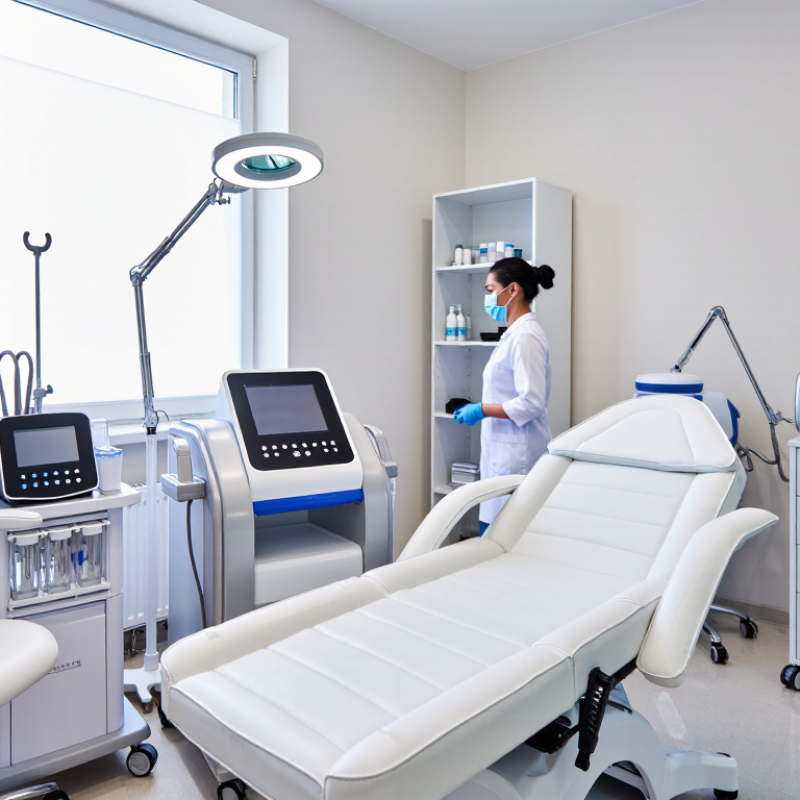
Choosing the best facial salon equipment starts with your treatment goals, not the equipment catalog. Decide whether your salon focuses on hydration, calming care, deep cleansing, or appearance-focused treatments. Each goal requires different functions, settings, and operator skills. A consultation room may reveal more than a sales brochure. Ask clients about sensitivity, dryness, oiliness, and their preferred treatment time.
Observe the treatment environment closely. A small salon may need compact equipment with simple controls and quiet operation. A busy salon may value faster setup, easy cleaning, and adjustable treatment settings. Keep client comfort in view. Warm towels, stable positioning, and clear instructions can influence the experience as much as advanced features. No device replaces proper skin assessment.
Safety and reliability should guide every purchase. Check cleaning requirements, user training, maintenance support, and compliance with local regulations. Confirm that staff can understand the controls before serving clients. Record treatment settings and client reactions, especially when testing a new procedure. Some equipment may look impressive but add little value to your service menu. That is an easy mistake. Review results after several weeks, then question whether the equipment truly improves outcomes, workflow, or client trust.
Compare Equipment Types by Function, Technology, and Treatment Use
How to Choose the Best Facial Salon Equipment?
Compare equipment by function, technology, and treatment use. Start with the client’s skin concern, not the newest machine. LED systems suit calming and post-treatment support. Radiofrequency targets gentle skin warming and temporary firming. Ultrasound devices may assist cleansing or product infusion, depending on their settings. Hydrodermabrasion focuses on surface exfoliation and hydration. Each technology needs different training, maintenance, and safety controls.
The 2023 ISAPS Global Survey recorded more than 19 million nonsurgical aesthetic procedures worldwide. This demand does not make every device a smart investment. Check energy levels, treatment modes, handpiece design, cleaning access, and documented service support. Ask whether the equipment has clear operating instructions and appropriate safety documentation. In my experience, complicated screens can slow a busy treatment room. That matters. A lower-cost device may also become expensive when consumables and repairs are overlooked. I still find that salons sometimes choose impressive features over daily usefulness.
Tips: Match each machine to three common treatments. Request a live demonstration before purchase. Record treatment times, consumable costs, and staff training hours. Never promise medical results from salon equipment. Review client contraindications, sanitation procedures, and local professional requirements. Keep treatment records, even for simple facials. Data supports demand, but careful observation should guide the final choice.
Assess Safety Standards, Certifications, and Operator Requirements
How to Choose the Best Facial Salon Equipment?
Safety should guide every equipment decision, not attractive specifications. Check whether the device has recognized conformity documentation, electrical safety testing, and risk-management records. IEC 60601-1 addresses basic safety for medical electrical equipment, while IEC 62471 evaluates photobiological risks from lamps and LED sources. For laser systems, ANSI Z136.1 provides useful operational guidance. A certificate alone is not enough. Ask who tested it, which model was tested, and whether the certificate remains valid.
Regulatory clearance also needs careful interpretation. The FDA’s 2023 Medical Device Reporting annual data recorded more than two million device reports across product categories. These reports include duplicates and do not prove that a device caused harm, but they show why post-market vigilance matters. Request maintenance schedules, calibration records, contraindication lists, and emergency procedures. Inspect cables, handpieces, cooling surfaces, and warning labels before purchase. Small defects become serious during a busy afternoon.
Operator requirements vary by location and treatment type. Confirm local licensing rules before offering intense light, radiofrequency, ultrasound, or laser procedures. Training should include skin assessment, eye protection, burns prevention, infection control, and incident documentation. ISO 14971 risk-management principles can strengthen internal procedures, even when not legally required. I would also ask for supervised practice, not just an online certificate. That distinction is easy to miss. My own checklist would include a trial session, yet one test cannot reveal long-term reliability. Reviewers should admit that limitation.
Calculate Equipment Costs, Maintenance Needs, and Long-Term Value
How to Choose the Best Facial Salon Equipment?
Choosing facial salon equipment starts with the treatment menu, not attractive screens. In daily practice, a multifunction device can save space, yet unused attachments increase the purchase price. List each planned service, then estimate weekly sessions. Record treatment time, consumables, staff training, and expected revenue per session. A simple spreadsheet exposes inflated assumptions. Be honest here.
Calculate ownership costs over three to five years. Include delivery, installation, electricity, replacement handpieces, software access, inspections, and downtime. Ask the supplier for a written maintenance schedule and service response times. Filters and contact surfaces may need cleaning between clients. Some components require trained technicians, not improvised repairs. Keep records. They protect decisions. I once underestimated training hours, and the opening schedule suffered.
Long-term value depends on reliability, safety features, usable settings, and staff confidence. Compare warranty coverage with the likely cost of one major repair. A cheaper machine is not automatically economical. Nor is the most expensive model always superior. Request a demonstration under realistic treatment conditions. Check whether controls remain intuitive while wearing gloves. Review technical documentation, electrical certification, and local service availability. Leave a contingency fund for unexpected repairs. My estimates are never perfect, so I revisit them quarterly.
Verify Supplier Support, Training, Warranties, and Upgrade Options
How to Choose the Best Facial Salon Equipment?
Choosing facial salon equipment is less about polished screens than dependable support after installation. That support should be written into the quotation. Ask who trains operators, how long training lasts, and whether refresher sessions are included. Request a live demonstration using realistic treatment scenarios. Short videos are helpful, but hands-on correction is safer. Small gaps matter.
Warranty language deserves close attention. Confirm coverage for handpieces, power systems, software, and replacement parts. Ask about response times, repair locations, loaner equipment, and calibration records. A two-year warranty means little if service takes six weeks. The International Society of Aesthetic Plastic Surgery reported 19.1 million non-surgical procedures worldwide in 2023. That volume increases pressure on clinics to reduce downtime and maintain consistent treatments.
Upgrade planning also protects the investment. Ask whether software updates, new treatment modules, and compatible accessories are available. The Global Wellness Institute valued the global wellness economy at 6.3 trillion dollars in 2023, showing how quickly client expectations are evolving. Still, growth does not guarantee good support. I once treated a low price as proof of value; it was a poor assumption. Compare total ownership costs, not only the purchase invoice. Keep every promise in writing, including training dates, service targets, warranty exclusions, and future upgrade pricing. A supplier that avoids specific answers may become expensive later.
How to Choose the Best Facial Salon Equipment?
Compare suppliers by verifying four practical evidence areas: after-sales support, operator training, warranty coverage, and future upgrade options.
The chart uses a four-point procurement checklist for each category. Before purchasing, ask suppliers to provide written evidence for every item: service response channels, training materials, warranty terms, and upgrade compatibility or pricing.
Related Posts
-
2026 Top Facial Salon Equipment Suppliers?
-
What Is a Facial Salon and How Does It Work?
-
Best Face Spa Manufacturers in China for Global Buyers
-
China Top 10 Skin Esthetician Equipment Manufacturers?
-

Unlock Radiant Skin: How Esthetician Facial Machines Transform Your Beauty Routine
-
Top 10 Facial Esthetician Techniques for Glowing Skin