Top 10 Types of Advanced Esthetics Equipment
Advanced esthetics is no longer defined by a machine’s polished screen or list of settings. It is defined by informed choices, careful assessment, and consistent technique. Esthetics educator Lydia Sarfati is known for emphasizing personalized skincare. A practical paraphrase of that approach is: “Choose technology for the client’s needs, not the trend.” This is an editorial paraphrase, not a verified direct quotation.
The “Top 10 Types of Advanced Esthetics Equipment” guide explores tools used in professional treatment settings, including LED systems, microcurrent devices, radiofrequency equipment, ultrasonic tools, and hydrodermabrasion machines. Each category has a different purpose. Some focus on surface cleansing; others support targeted cosmetic treatments. The device alone does not guarantee a good outcome. Training, maintenance, consultation, and appropriate treatment planning matter just as much.
Details count. A practitioner might check a device’s handpiece, review its settings, and explain expected sensations before beginning. They should also consider skin condition, client history, and manufacturer guidance. Small steps. Real impact. Equipment capabilities vary, and results differ from person to person. That deserves honest discussion.
This overview is not a shopping shortcut or a promise of results. It is a starting point for comparing technologies, asking better questions, and recognizing where more training may be needed. Even experienced professionals can mistake novelty for value. A little skepticism helps.
What Defines Advanced Esthetics Equipment
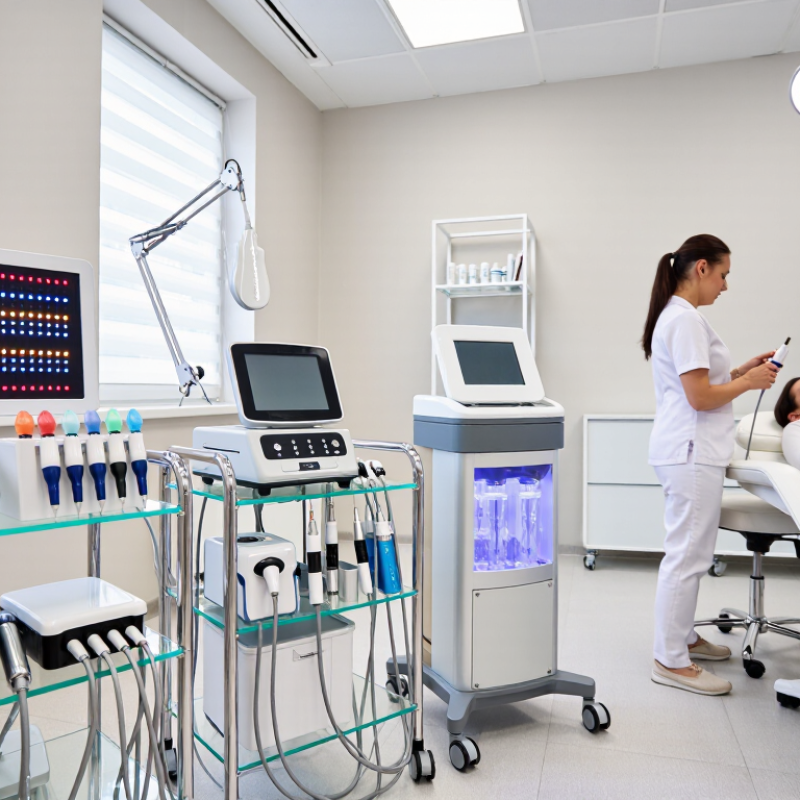
Advanced esthetics equipment is not defined by a sleek screen or a high price. It earns that description through precise controls, documented performance, and safety features suited to its intended treatment. Operators should understand how settings affect different skin types and conditions. Clear instructions matter. So do stable output and reliable temperature or energy limits. A device that displays detailed numbers but cannot maintain consistent settings may not be advanced in practice.
Across the top ten equipment types, capabilities differ: light-based devices, skin-imaging systems, and exfoliation tools each require controls suited to their function. Look for adjustable parameters, clear warnings, maintenance guidance, and training materials. Ask how performance is checked and what routine servicing involves. These details help distinguish useful technology from impressive-looking features. No device is advanced for every treatment room, and that distinction is easy to overlook.
Tips: Before use, inspect the handpiece, cables, and contact surfaces. Confirm settings match the service and the client’s needs. Keep a simple maintenance log, including dates and any irregular output. A quick check can catch a problem early. Still, manuals do not replace hands-on training; that is an area where busy teams may need to be more deliberate.

Skin Analysis and Diagnostic Technologies
Skin analysis and diagnostic technologies now anchor advanced esthetics equipment. High-resolution cameras can reveal pores, redness, pigmentation, and uneven texture. Polarized and ultraviolet imaging may show surface oil or hidden sun damage. Multispectral systems examine how light interacts with different skin layers. Three-dimensional facial mapping also tracks contour changes over time.
The International Society of Aesthetic Plastic Surgery reported more than 19 million surgical procedures worldwide in 2023. Its survey also recorded millions of nonsurgical treatments. This growth increases demand for measurable consultations. The Global Wellness Institute valued the global wellness economy at $5.6 trillion in 2022, supporting wider investment in personalized care. However, device readings are not medical diagnoses. Lighting, hydration, recent exercise, and operator technique can change results. The image may look precise. It can still mislead.
Tips: Capture baseline images under identical lighting and camera distance. Record recent exfoliation, sun exposure, and product use. Compare trends, not one dramatic score. Ask clients to review consent and data-storage policies. Never promise improvement from a color map alone. A thoughtful professional should question unclear readings, repeat the scan, and refer persistent lesions to a qualified medical provider. Even experienced operators need calibration training. That part is often underestimated.
Energy-Based Devices for Skin Rejuvenation
Top 10 Types of Advanced Esthetics Equipment
Energy-Based Devices for Skin Rejuvenation
Energy-based devices deliver controlled light, heat, or sound to targeted skin layers. Common options include LED light, intense pulsed light, radiofrequency, fractional lasers, and ultrasound. Each works differently. LED treatments are generally gentle, while some laser and radiofrequency procedures may cause temporary redness or sensitivity. Results vary with skin type, treatment settings, and the concern being addressed. A thorough consultation matters more than choosing the newest device.
Providers should review medical history, medications, recent sun exposure, and prior procedures before recommending treatment. Protective eyewear and carefully adjusted settings are essential during many energy-based sessions. Ask about expected downtime, possible side effects, and how progress will be assessed. No device suits every concern. That can be frustrating, but it is better to acknowledge than promise identical results for everyone. Skin may also respond unevenly, so follow-up and realistic expectations are part of responsible care.
Tips: Arrive with clean skin and share any recent treatments or changes in medication. Follow the provider’s aftercare instructions, including sun protection. Keep a simple record of redness, comfort, and visible changes. Small details help guide safer decisions.
Resurfacing, Infusion, and Body Contouring Equipment
Top 10 Types of Advanced Esthetics Equipment
Advanced esthetics equipment supports three popular goals: resurfacing, infusion, and body contouring. Resurfacing devices help refine uneven texture, dull tone, and visible pores by removing damaged outer layers or stimulating renewal. Infusion equipment may improve product delivery through controlled pressure, vibration, or superficial channels. Body contouring systems target localized concerns, such as mild laxity or unwanted fat appearance, using energy-based approaches. Results depend on the client’s skin condition, lifestyle, and treatment plan. Technology is not a shortcut.
In professional practice, careful assessment should come before every session. A trained provider should review medical history, skin sensitivity, recent procedures, and realistic expectations. Resurfacing may cause temporary redness, while infusion can produce dryness or mild irritation. Body contouring usually requires multiple sessions and consistent maintenance. Results can be subtle. That is worth admitting. Equipment settings, hygiene procedures, and aftercare instructions also influence safety and client satisfaction.
Tips: Choose equipment according to the treatment goal, not popularity. Test sensitivity when appropriate. Use measured settings and document every session. Avoid promising permanent results. Clients should protect treated skin from excessive sun exposure and follow professional aftercare guidance. A simple progress photograph can reveal changes that memory often exaggerates. Review outcomes honestly, then adjust the plan when necessary.
Top 10 Types of Advanced Esthetics Equipment
Typical treatment-session duration ranges (minutes)
Bars show approximate session-duration ranges. Actual appointment times vary with treatment area, protocol, and provider.
Safety Standards, Treatment Selection, and Professional Use
Top 10 Types of Advanced Esthetics Equipment
Safety Standards, Treatment Selection, and Professional Use
Advanced esthetics equipment can support treatments such as light-based care, exfoliation, skin analysis, and controlled heating. The right choice depends on the client’s skin, treatment goals, and professional training—not on how many settings a device offers. A careful consultation should cover sensitivities, recent treatments, and relevant health history. Small details matter.
Before use, check the device’s instructions, maintenance records, and required operator training. Inspect cables, handpieces, and treatment surfaces; a cracked part or residue can compromise safe, consistent use. Protective eyewear and clean contact surfaces should match the device and procedure. Follow its stated settings and avoid improvising when results seem slow. Pause if the client reports unusual discomfort.
Treatment selection also calls for restraint. A stronger setting is not automatically a better one, and some clients may need a gentler option or referral to a qualified medical professional. Explain likely sensations, aftercare, and realistic outcomes in plain language. Document settings and the skin’s response after each session. This can feel repetitive, but it helps identify patterns and improve future decisions. No checklist replaces sound judgment.
Top 10 Types of Advanced Esthetics Equipment - Safety Standards, Treatment Selection, and Professional Use
| Equipment Type | Technology | Typical Treatment Uses | Treatment Selection Considerations | Safety and Professional Use |
|---|---|---|---|---|
| 1. Laser Hair-Reduction Systems | Selective photothermolysis targets pigment in hair follicles using specific light wavelengths. | Long-term reduction of unwanted hair; multiple sessions are generally needed. | Assess hair color, skin tone, recent tanning, treatment area, and device labeling. Light-colored hair may respond poorly. | Use wavelength-appropriate protective eyewear, a skin assessment, a test spot when indicated, and trained operators. Follow local scope-of-practice rules. |
| 2. Intense Pulsed Light (IPL) Systems | Broad-spectrum, filtered light delivered in pulses; IPL is not a laser. | Selected hair-reduction and photorejuvenation applications, depending on device indications. | Suitability depends on the device’s filters and settings, skin tone, pigmentation, hair characteristics, and treatment goal. | Protect eyes, verify filters and settings, and screen for tanning, photosensitizing medicines, and relevant skin conditions. Use only within training and legal authorization. |
| 3. Non-Ablative Fractional Laser Systems | Creates controlled fractional thermal zones while leaving surrounding skin intact. | May be used by qualified providers for selected texture, photoaging, or scar concerns. | Select based on the device indication, skin characteristics, downtime tolerance, and clinical assessment. | Requires eye protection, infection-control procedures, appropriate training, and clear aftercare instructions. Treatment depth and risk vary by device and settings. |
| 4. Ablative Laser Resurfacing Systems | Removes or vaporizes targeted tissue; fractional and full-field approaches have different tissue effects. | Resurfacing for selected scars, wrinkles, or sun damage under appropriate clinical care. | Requires careful assessment of skin type, healing history, infection risk, and willingness to follow recovery care. | Higher-risk procedure requiring appropriately licensed and trained providers, eye protection, plume control where applicable, and strict infection prevention. |
| 5. Radiofrequency (RF) Systems | Uses electrical energy to generate heat in targeted tissue; configurations include monopolar, bipolar, and multipolar systems. | Some systems are intended for temporary improvement in skin appearance or firmness. | Choose according to the device’s labeled purpose, treatment area, skin condition, and client goals. | Screen for implanted electronic devices and other contraindications listed by the manufacturer. Monitor comfort and skin response to reduce burn risk. |
| 6. Microfocused Ultrasound Systems | Delivers focused acoustic energy to selected tissue depths without intentionally ablating the surface skin. | Certain systems are used for non-surgical lifting or tightening indications. | Assess anatomy, treatment area, goals, and device-specific indications; results and suitability vary between individuals. | Use only trained, authorized operators and the specified transducer and settings. Avoid areas identified as restricted in device instructions. |
| 7. LED Photobiomodulation Devices | Uses non-thermal or low-heat visible or near-infrared light at device-specific wavelengths and doses. | May support selected acne or skin-appearance protocols, depending on device indications. | Match the device’s wavelength, dose, and intended use to the treatment goal; expectations should be realistic. | Follow eye-safety instructions and screen for photosensitivity or medicines that increase light sensitivity. Use the specified exposure time. |
| 8. Microdermabrasion Systems | Mechanically exfoliates the outermost skin using abrasive tips or crystals with controlled suction. | Superficial exfoliation to improve the feel and appearance of selected skin concerns. | Consider skin sensitivity, active irritation, recent procedures, and the desired level of exfoliation. | Do not treat compromised or actively infected skin. Use clean or single-use components as required, control suction, and avoid excessive abrasion. |
| 9. Automated Microneedling Systems | Uses sterile needles to create controlled micro-injuries at adjustable depths. | May be used by appropriately qualified practitioners for selected texture or scar concerns. | Assess skin condition, healing risk, treatment area, and whether the requested needle depth is within the provider’s legal scope. | Use sterile, single-use needle cartridges and aseptic technique. Avoid treatment over active infection; follow local rules for penetration depth and provider qualifications. |
| 10. Electroporation / Iontophoresis Systems | Uses electrical current or brief pulses to influence topical ingredient movement across the skin barrier; mechanisms differ by modality. | Used in some non-invasive facial protocols to support topical product application. | Select only products compatible with the device and intended route; topical use does not establish that an ingredient is safe for every client. | Screen for contraindications in device instructions, including relevant implanted devices or skin conditions. Follow electrode placement, current limits, and hygiene procedures. |
Professional safety note: Device indications, risk levels, operator qualifications, and permitted procedures vary by device and jurisdiction. Review current manufacturer instructions and applicable local regulations before treatment. Regulatory clearance or authorization for a specific use should not be interpreted as a guarantee of results or as permission for every provider to perform that procedure.