Skip to content
Policy FAQ
   
(908) 210-9335
   
Now Available: Cherry Payment Plans!
Are you interested in paying in installments with Cherry payment plans? Get pre-approved today! Applying won’t harm your credit!
graphical user interface, website

7 Tips for Choosing the Best Facial Esthetician?

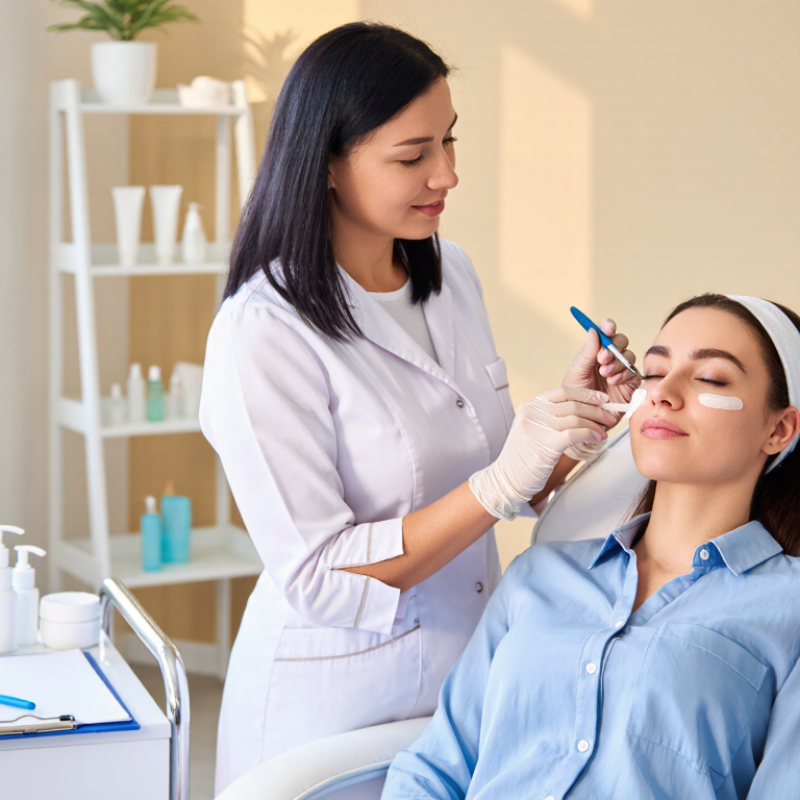
Choosing a facial esthetician is about more than finding a quiet room and a relaxing facial. The right professional should listen closely, explain each step, and tailor care to your skin’s needs. A calm consultation matters. So does a clean treatment space, clear pricing, and realistic advice. Dr. Howard Murad, dermatologist and skin-care founder, has said, “The skin is a reflection of your overall health.” That reminder helps put treatments in perspective: a facial can support a skin-care routine, but it cannot replace individualized medical advice when a concern needs clinical attention.

This guide shares seven practical tips for choosing a facial esthetician, from checking training and experience to asking about products, hygiene, and aftercare. Notice how the esthetician responds when you describe sensitivity, past reactions, or your current routine. Do they ask useful questions, or promise dramatic results before examining your skin? Those details can tell you a lot. A polished website is not proof of good practice, and an awkward first consultation does not automatically mean poor care. I would not judge by one detail alone. Look for consistent signs of professionalism, thoughtful communication, and respect for your comfort. Your skin may not behave exactly as expected, either. A trustworthy provider should be willing to discuss uncertainty and adjust the plan rather than push a treatment that does not feel right.
7 Tips for Choosing the Best Facial Esthetician?

Verify State Licensure and Required Training Hours Before Booking

Before booking a facial, confirm that the esthetician holds an active license in the state where the service will take place. Requirements differ by state, so avoid relying on a generic online checklist. Search the official state licensing board or department website, and match the name and license number carefully. Check the expiration date and any public restrictions or disciplinary information. Small check. Worth it.

Ask how many training hours the state requires and whether the esthetician completed an approved program. A course certificate may show attendance, but it is not always the same as a state license. If the public registry is unclear, contact the licensing agency directly. It is easy to assume a polished treatment room means thorough training; that assumption can fail. Licensing also does not guarantee a particular result, but it confirms that minimum requirements have been met.

Before you book, ask which services the esthetician is licensed and trained to provide. A careful professional should explain their qualifications plainly and describe when a facial is not appropriate for your skin. Notice whether their answers are specific, not rushed. If details do not match the official record, pause and verify them before scheduling.
Check Hygiene Practices Against the CDC’s 20-Second Handwashing Guidance

Clean hands are one of the simplest signs of attentive care during a facial treatment. The CDC advises washing with soap and water for at least 20 seconds. Look for this before treatment, after touching a phone or used linens, and after removing gloves. Gloves are not a substitute for clean hands. Watch the sink. Does the esthetician wet their hands, lather their palms, backs, between their fingers, and around their nails, then rinse and dry with a clean towel?

Notice whether handwashing happens between clients, not just at opening. Hand sanitizer can help when hands are not visibly soiled. Still, it does not replace washing when hands look dirty. Ask how tools and treatment surfaces are cleaned, too; hand hygiene is only one part of infection prevention. A rushed rinse is easy to miss. That’s worth noticing. No single sign proves a room is safe, and a neat counter can hide gaps. If the answer feels vague, pause and ask about the studio’s cleaning routine before booking.

Match Services to Credentials: BLS Projected 7% Job Growth (2023–33)

The U.S. Bureau of Labor Statistics projects employment for skincare specialists to grow 7% from 2023 to 2033. That forecast signals expanding demand, not a guarantee of better care. A growing field can include practitioners with very different training, experience, and service limits. Use the projection as context, not as a reason to book quickly.

Match the treatment to the esthetician’s credentials. Ask what specific training they have for your service, such as chemical exfoliation, acne-focused care, or sensitive-skin treatments. Credential rules vary by location, so check the relevant licensing authority and confirm the practitioner may perform the service where you live. Ask about consultation steps, sanitation, and how they adapt treatment when skin reacts. Clear answers matter. So does a willingness to refer concerns beyond their expertise to a qualified medical professional.

Look for practical details during the consultation: a clean treatment room, fresh linens, and questions about allergies, medications, or recent procedures. Request a plain-language explanation of likely benefits, possible irritation, and aftercare. Be wary of anyone promising identical results for every client. It is tempting to treat a polished profile or a busy schedule as proof of skill; neither tells the whole story. I would still want to ask one more question, even if the appointment feels reassuring.

Assess Consultation, Patch-Testing, and Contraindication Screening

A good facial-esthetician consultation should feel like a careful intake, not a sales pitch. Expect questions about allergies, eczema, cold sores, medications, recent procedures, and products that sting. Bring your current product list, including prescriptions. Ask which ingredients or techniques are planned and what reactions should prompt you to stop. A practitioner should explain limits and refer medical concerns to a clinician. A spotless room helps, but it is not proof of sound screening.

Patch testing matters when a product may trigger a reaction, but it is not a guarantee against irritation. Ask what will be tested, where, and how long you should watch the area. The American Academy of Dermatology notes that formal allergy patch testing is used to identify contact allergens; an esthetician’s small-area test is not a medical diagnosis. A 2007 systematic review in Contact Dermatitis reported contact allergy in about 20% of general-population samples. That figure does not predict your personal risk. Ask whether the studio screens for contraindications before treatment, including broken skin or a recent peel. I would not treat a confident “you’ll be fine” as an answer. It is reasonable to pause and ask more.

7 Tips for Choosing the Best Facial Esthetician

Assess the consultation, patch-testing plan, and contraindication screening before booking.

Bars count suggested questions to cover—not clinical risk scores. Ask how the practitioner adapts screening and treatment to your skin, health history, and chosen procedure.

Compare Transparent Pricing and Reviews With Your Skin-Care Goals

7 Tips for Choosing the Best Facial Esthetician?

A good choice starts with your skin-care goals, not a polished treatment menu.

Tip 1: Write down your main concern, such as dryness or sensitivity.

Tip 2: Ask what a first visit includes and request the full price before booking. Does it include consultation, products, and follow-up?

Tip 3: Check whether optional add-ons are clearly priced. Small details matter.

Tip 4: Read recent reviews for specifics, not just star ratings. Look for comments about communication, cleanliness, and how results were explained.

Tip 5: Compare reviews from people with skin concerns similar to yours. One glowing review may not tell you much. Reviews are imperfect evidence, so notice patterns rather than expecting every experience to match.

Tip 6: Ask about training, sanitation practices, and whether the suggested treatment fits your goals. A careful professional should explain possible irritation and when a treatment may not suit you.

Tip 7: Compare the estimated cost over several visits, not only the introductory price. If recommendations feel rushed or promises sound certain, pause and ask more questions. Sometimes the best next step is a second opinion.

Back To Top Skip to content